Fried, Rancière and the Form of the Photograph (2011)
The photograph thus presents itself as a kind of theoretical antithesis to the Diderotian still life and, of course, this view is by no means limited to Barthes. On the contrary, from the very start, the claims photographers have made to be artists have been contested by critics denying that the photograph has enough “intentional meaning” “to be considered fine art. ”5 And Barthes is by no means the only recent writer to maintain some version of this position. But it’s a crucial fact about Barthes that (unlike, say, the notoriously sceptical Roger Scruton) his interest is not primarily in debunking photography’s claims to art, and not at all in claiming that because the photograph is not fully or adequately intended it cannot count as art. For, in Barthes’ own writing, art itself — with literature as the exemplary case — had already been disconnected from the question of intentional meaning.6 That is, starting at least in the mid 1960s and emerging more fully in “The Death of the Author” (1968) and “From Work to Text” (1971), there is a crucial sense in which for Barthes the irrelevance of “the author’s declared intentions” and the “removal of the Author”7 more generally had come to be seen as constitutive at the very least of modern aesthetic production and at the most of the idea of aesthetic production as such. “Writing begins,” Barthes says, when “the voice loses it origin” and “the author enters his own death.”8
Furthermore, as every student of literary theory knows very well — you learn it the minute you first read “The Intentional Fallacy” — this position was hardly unique to Barthes, or, for that matter, to Barthes and the others (Foucault, Derrida) who held some version of it. Beginning in the mid-1940s, the idea that the meaning of a literary work was not determined by its author’s intentions was foundational for American literary criticism, providing the material (although this was by no means what it was designed to do) for a potential theoretical solution to an aesthetic problem. The aesthetic problem was how to create anti-theatrical works of art at the moment when the very effort to do so (indeed, any effort at all) had begun to register as theatrical. The theoretical solution was to deny not that those efforts took place but that they were in any way constitutive of the meaning of the work of art. It was the syntactic and semantic rules of the language, not the author’s consciousness that determined the meaning of the work. Thus Fry’s strenuous but not very compelling attempt to imagine a kind of psychology for the painter’s desire not to produce an effect on the beholder (“half-conscious,” “almost unconscious,” “perfect sincerity,” “complete indifference”) is rendered supererogatory. The new theoretical anti-intentionalism rescues the critic from a psychological anti-intentionalism that, still committed to some account of the artist’s agency, can only register the artist’s actions as unconscious (and hence not fully actions) or as completely disconnected from all possible consequences (and hence, again, not fully actions). Now, the ontological irrelevance of the artist’s intentions, whatever they are, makes it unnecessary to deny that he actually had any.9
For our purposes, however, Barthes’s version of anti-intentionalism is more crucial than Wimsatt’s and Beardsley’s, and for two reasons. The first is that Barthes’s is theoretical and aesthetic (in effect, the anti-theatrical aesthetic creates the necessity for the anti-intentional — i.e. theatrical — theory) whereas Wimsatt’s and Beardsley’s is theoretical and methodological. Barthes is defending certain aesthetic values; Wimsatt and Beardsley were seeking to establish the “public” and “objective” character of literary meaning. Their concern was with professional literary criticism.10 And the second, which really follows from the first, is that insofar as Wimsatt and Beardsley were interested in establishing the public meaning of the text, they were just as opposed to considering the reader as they were to the writer; the companion to “The Intentional Fallacy” was “The Affective Fallacy.” Whereas Barthes is just the opposite; he explicitly links “The Death of the Author” to “the birth of the reader” and he explicitly celebrates the refusal of what he calls an “ultimate” meaning, the refusal to “fix meaning” that the shift from writer to reader makes inevitable.
Thus we have both an aesthetic solution to the problem of the artist’s agency — How do you avoid seeming to seek to produce an effect on the reader/beholder? Do nothing — and a theoretical answer to the question of the author’s agency — How do the artist’s actions determine the meaning of the work? They don’t. And just as, in Barthes, the theoretical answer immediately and (as I shall show) necessarily produces an appeal to the reader, so too does the aesthetic solution. That is, the theoretical solution to absorption’s aesthetic problem (the invention of an artist who could not be understood as performing for an audience because his intentions to produce certain effects were now understood as in principle irrelevant to the effects his work in fact produced) is simultaneously the transformation of absorption’s aesthetic indifference to the reader or beholder into a total — indeed (as I will also show), programmatic — appeal to the reader or beholder. In Camera Lucida, this is the whole point of the punctum, which is nothing but an accidental and unintended effect of the photograph on the beholder — the “detail” that can “‘prick’ me” only if the photographer has not put it there “intentionally” and that can prick me but may not prick you.11 That’s why Barthes famously doesn’t reproduce the Winter Garden photograph of his mother; it cannot have the effect on us (she’s not our mother) that it does on him — for us, no punctum, for us, “no wound.” The punctum, in other words, functions as an absorptive reproach to the “artifice” of the photographer, resisting and reproaching his inevitably theatrical efforts to produce a particular effect on the beholder while at the same time (and for the same reason) it transforms the photograph into a work dependent entirely on the beholder — a purely theatrical object. The absorptive demand of indifference to the reader/beholder becomes an insistence on the absolute primacy of the reader/beholder.
A Lazarus beside me

Avies Platt
The room filled up. [Norman] Haire and [Harry] Benjamin mounted the platform. Haire, from the chair, introduced Benjamin with appropriate remarks and Benjamin delivered his lecture. Here was quietness, assurance, scientific fact, human understanding, a vision for mankind: a German and a Jew who had found asylum in America, giving of his knowledge in England without self-interest or thought of personal gain. I was carried away beyond thought of my own gain, beyond the welfare of M.M. to a vision of a world made utopian by the fellowship of nations and the conquest of old age. ‘Life, after all, is not important,’ the speaker concluded. ‘Only living is.’
Questions and discussion followed. Two things remain in my memory. A man asked scornfully what was the connection, if any, between physical rejuvenation and the love to which the poets testified all down the ages? Strangely, I cannot recall Benjamin’s reply, but a woman got up and said that she had been ‘rejuvenated’ with the sole idea of benefiting her health, but that to her amazement she had fallen in love again and to her even greater amazement her love had been returned, and that, she submitted, was the gentleman’s answer. As far as I am aware the man who had gazed upon me said nothing. Neither did I. There seemed nothing more to say.
The meeting dispersed. I stayed behind to speak to the society’s secretary and so was one of the last to go down the stairs and out into the street. I remember how refreshing was the spring evening after the stuffy room.
The last cars, mostly large fashionable ones, were moving off. Only my poor old Singer remained, parked in the cul-de-sac outside the galleries. I knew that the battery was down so I took the starting handle and proceeded to crank up the engine. It was obstinate, and as I stooped there, struggling (somewhat incongruously, for I was in evening dress), I heard a voice say, ‘I’m sorry. I’m afraid I’m not much good with those things.’ I looked up and recognised the man who had compelled me to turn round in the lecture room. He stood on the pavement, half in shadow, at the end of the little street; motionless, as though he had always stood there, and always would. His presence there came as a shock. With my mind full of the lecture I had completely forgotten to notice what had happened to him after the meeting had broken up.
‘That’s all right,’ I said. ‘Please don’t apologise. I’m used to it.’ He looked on in silence. By the time the engine was going the place was deserted. We were the only people left. It seemed queer that so distinguished looking a person should appear so lonely and not have gone off in one of the big cars. I became acutely aware of the defects of mine, but at least it was going. It was clearly up to me to do something about it.
‘Are you, by any chance, going to Norman Haire’s party?’ I inquired. ‘I rather think that is where I’m supposed to be going,’ he replied. A little strange, that, I thought. But I said, ‘That’s where I’m going, so perhaps I may give you a lift?’ ‘Thank you,’ he said. ‘That’s very kind of you.’ And we got into the car and drove off.
At first neither of us spoke. I was concerned with joining the stream of traffic in Lower Regent Street. Then he asked abruptly: ‘Are you connected with the arts?’ ‘I don’t know about connected,’ I replied guardedly. ‘I’m interested.’ ‘And may I ask the name of my kind chauffeur?’ he continued. ‘Platt,’ I said. ‘Avies Platt. And may I ask yours?’ ‘Yeats,’ he said! ‘W.B. Yeats.’ And added: ‘I’m a poet.’
Flowing locks
On first approach to a novel, Nabokov claimed, we are overwhelmed with too much information and fatigued by the effort of scanning the lines. Only later, on successive encounters with the text, will we begin to see and appreciate it as a whole, as we do with a painting. So, paradoxically, then, “there is no reading, only rereading.”
This attitude, I recently suggested in this space, amounts to an elitist agenda, an unhappy obsession with control, a desire to possess the text (with always the implication that there very few texts worth possessing) rather than accept the contingency of each reading moment by moment.
“Wrong!” a reader objects. “Isn’t it true,” he invites an analogy with music “that the first time we hear a new song we can’t really enjoy it? Only after two or three hearings will it really begin to give us pleasure.” He then adds this intriguing formulation:
When we perceive something new for the first time we cannot really perceive it because we lack the appropriate structure that allows us to perceive it. Our brain is like a lock maker that makes a lock whenever a key is deemed interesting enough. But when a key—for example, a new poem, or a new species of animal—is first met, there is no lock yet ready for such a key. Or to be precise, the key is not even a key since it does not open anything yet. It is a potential key. However, the encounter between the brain and this potential key triggers the making of a lock. The next time we meet or perceive the object/key it will open the lock prepared for it in the brain.
It’s an elaborate theory and in fact the reader turns out to be the philosopher and psychologist Riccardo Manzotti. Intriguing above all is the reversal of the usual key/lock analogy. The mind is not devising a key to decipher the text, it is disposing itself in such a way as to allow the text to become a key that unlocks sensation and “meaning” in the mind.
Is Manzotti right? And if so, what does it tell us about reading?
Certainly we have all had the experience he describes on first encounter with difficult texts, poetry in particular. My first reading of The Waste Land, in a high-school literature class at age sixteen, was hardly a reading at all. It would take many lessons and cribs and further readings before suddenly Eliot’s approach could begin to awaken recognition and appreciation, before “April is the cruellest month,” that is, genuinely reminded me how difficult life and change could be in contrast to hibernation. The mind had conjured a lock that allowed the poem to function as a key; it fitted into my mind and something turned and swung open.
Two reflections. This Waste Land lock also seemed well suited to or easily adapted for a range of other keys. My mind could now be opened by other modernist poems far more quickly. Eliot’s other poems, in particular, all activated the senses smoothly enough. And while one would never perhaps reach the point of satisfying all one’s curiosity for a new poem in a single reading, still the lock-making process was now infinitely faster, to the point that there would sometimes be a sense of déjà vu: Oh, it’s this sort of lock the key wants to open. Or even: Oh not this again, how disappointing! Which perhaps explained why poets now no longer wrote in this way and had moved on.
This prompts a second reflection. With a certain kind of reading the pleasure lies in the lock-making process, the progressive meshing of mind and text. Once we are familiar with the kind of experience the text opens up in our minds, we will be less excited. Or at least, the pleasure will be of a different kind, offering the reassurance of the known, or simply a happy reminder of that more strenuous lock-making period. Such a distinction might help us tackle the old chestnut of the difference between genre fiction and literary work. There is no continuing learning process with genre fiction. We know how to read a Maigret and would never dream of rereading one. It always prompts the same reactions. But with a literary novel, we would expect the pleasure of an effort of adjustment, of new vistas being opened in the mind.
So Nabokov was right perhaps, or at least for complex novels, which for him were probably the only ones he was interested in. We have to reread.
Heavenly treacle for wizard ears
I just squandered two or three precious should-be-working hours trundling around music-streaming sites looking for “The Banks of Sweet Italy,” my all-time favorite Incredible String Band song. Dotty, druggy, sublime ye-olde mimsy: you will no doubt remember the arpeggiated fake-medieval daftness of it all. Finger bells and tootlings. Ladies and unicorns. Pointy handmade shoes. Heavenly treacle for wizard ears!
When I finally lay cybergauntlets on the song, it turns out to be from Earthspan (1972), one of the group’s later, somewhat decadent albums, made when Robin Williamson — the band’s most visionary, droll, and profusely gifted member — and Mike Heron, his coleader, were starting to bicker. Blond hippie girl Licorice McKechnie (Robin’s girlfriend at the time) is first up, delivering the opening verse in a shrill, eldritch, teeth-on-edge soprano:
And must you go, my flower, my gem,
My laughter and my hope of joy,
To follow fortune through all the world?
May luck pursue you, my darling boy.
She yields, some will say blessedly, to recorder and lute-plucking, followed by Mike and Robin and Malcolm Le Maistre — suitably boomy — singing a nutty Knights Templar refrain:
The sun shines bright in France.
Yellow it shines on high Barbaree.
Oh, be my light of day
Tarry not long on the banks of sweet Italy.
Then, finally: darling Robin alone, in gleeful banshee mode, whirling forward into his signature vocal arabesques. Haverings, stork cries, labyrinth sounds, mystic ululations that envelop the listener like a cloud of Scottish fairy dust — he’s liquid, primeval, the guardian spirit at the heart of the maze. Yes, it’s 2015. Old friends have vanished in the mist. Countless species have become extinct. But here I am again: At One with the Great God Pan.
Is there anything more shaming than doting on the electrified English folk-rock of the late Sixties and early Seventies? It’s taken me, I confess, a dreadfully long time to come to terms with it — to acknowledge that I adore, nay, have always adored, the whole tambourinetapping, raggle-taggle mob of them: Pentangle, Fairport Convention, Sandy Denny, John Renbourn, Shirley Collins, Bert Jansch, Martin Carthy, Steeleye Span, Maddy Prior, Richard and Linda Thompson, Lindisfarne. I still venerate Jethro Tull and its leader, the psychedelic flutist Ian Anderson, unforgettable for his dandified overcoat, harelike skittishness, and giant comic aureole of red beard and frizzy hair. It’s like admitting you’d rather go to the local Renaissance Faire than hear Mahler’s Lieder at Wigmore Hall.
One is cruelly dated by one’s doting. The British fad for switched-on folk reached its apogee somewhere between 1968, when the Incredible String Band released its sitar-laced masterwork, The Hangman’s Beautiful Daughter, and 1978, the year that the lissome but likely inebriated Sandy Denny, former lead singer of Fairport Convention, died of blunt head trauma after falling down a flight of stairs. Yes, one capered and twirled through it all. Alas, one is now fairly eldritch oneself — positively rime-covered.
I became a fan in the early Seventies, partly out of some romantic “Englishness” (British parents) and partly out of a Tolkien-influenced countercultural interest in ballads, alchemy, ancient magic, Celtic standing stones, and the literature of the Middle Ages. I was a bookish grad student, living alone in the Upper Midwest, yet oddly obsessed with Sir Gawain and dowsing wands. Long Lankin, Matty Groves, and Black Jack Davy — not to mention any number of ladies on milk-white steeds — somehow became my imaginary posse. Hearing Steeleye Span’s rollicky up-tempo rendering of “Little Sir Hugh” — Child Ballad No. 155 — on a radio show one morning was, I recall, a watershed moment:
Mother, mother, make my bed
Make for me a winding-sheet
Wrap me up in a cloak of gold
See if I can sleep
That Little Sir Hugh (speaking here) has just had all the blood drained from his body by a lamia is part of the charm.
Nothing quite the same, I found, existed in North American rock of the time — not in the heraldic, folk-guitar-spangled sound of the Byrds, or in pleasantly cheesy one-offs like Simon and Garfunkel’s “Scarborough Fair.” While still revered, perhaps, by New Age witches now residing in Wiccan assisted-living covens in Oregon and Big Sur, terminally wyrd favorites of mine such as Buffy Sainte-Marie’s doomy “Reynardine — A Vampire Legend” or Pentangle’s “Lyke Wake Dirge” were hardly emblematic of American popular taste. The United States, alas, was signally lacking in shires and sprites and elf-knights, not to mention mummery and morris dancers.
The heyday of true British folk-rock was brief. Along with Sandy Denny, other leading musical lights had disappeared from view by the late Seventies. Shirley Collins, the innovative balladeer behind the hugely influential album Anthems in Eden (1969), damaged her voice and stopped singing. Richard and Linda Thompson, one of the most unusual and mesmerizing vocal partnerships of the late twentieth century, became devout Sufis and later divorced. The Incredible String Band broke up in apparent acrimony in 1974. Robin moved to California, where he became active in the Church of Scientology. Licorice went with him, though she subsequently vanished into the Arizona desert. (Internet ghost trails suggest that after renouncing Scientology — as Robin seems to have done also — Licorice wished to evade L. Ron Hubbard’s vengeful myrmidons and assumed a new identity.)
Musical tastes had changed dramatically by then. Electronic pop and rock went in two antagonistic — yet both firmly anti-folkie — directions in the late 1970s: toward disco, rap, and urban dance music on the one hand (sexy, sleek, fun), and toward punk on the other (mock savagery, crashing chords, and taking the piss). My own, somewhat wistful, defection came around 1980, after I was mercilessly satirized by my neopunkoid quasi boyfriend Dick for hoping he might grok Richard Thompson’s dark and skirling live version of “Poor Will and the Jolly Hangman.” Yet as soon as I’d (reverently) laid down the needle, I had to snatch it up again — prompted by my companion’s hideously mimed display of convulsive writhing and retching. (I should have anticipated my folly: Dick had recently traded his pretty, bowl-shaped Botticelli haircut for one of clipped, David Byrne–style severity.) We had to wash out our ears at once with some bacteria-rich Iggy Pop and Sex Pistols. I later regained a mote of Dick’s respect because, unlike any other girl he knew, I actually owned several Ornette Coleman records and had started tiptoeing toward Alfred Ayler, Cecil Taylor, Anthony Braxton, and other thoroughly haute-arcane exponents of the jazz avant-garde. Such mandarin interests were enough to recall me, probationally, to the ranks of the maybe-elect.
But so too began my decades-long slide into musical pretentiousness: Cage and Webern, Harry Partch, rediscovered Baroque opera played on period instruments, obscure blues vamps, Renaissance polyphony, historic recordings from the decaying urns of forgotten French record companies, Ligeti études, Pauline Oliveros, Captain Beefheart, and Moroccan gnawa music — these became preferred listening. Manfred Eicher’s much-lauded German boutique label, ECM — notorious for its cerebral emphasis on the more severe strains of avant-garde chamber music (musique concrète, György Kurtág, Pierre Boulez) and stark, echt-minimalist jazz (mostly northern European) — became a go-to source for hardcore experimental stuff.
Yet life has its freaky surprises, and even kitsch of a long-gone era can suddenly — bizarrely — start pinging on one’s snob-radar. Take Robin Williamson. Yes, mon vieux, the golden-throated, once-and-future Ariel behind the Incredible String Band still makes records! The curly blond hair is an elfin silver now, but the voice remains intact — as Panlike and mellifluous as ever.
It turns out that after the Incredible String Band broke up, Williamson — who is now seventy-one and seemingly indefatigable (he still lives in California and continues to tour, with his wife and fellow musician, Bina) — carried on singing and recording for four long decades, most of them unremarked by the musical mainstream. But he has recently returned to view by way of four burnished and resplendent CDs, all of them on hallowed ECM. The most recent of these, Trusting in the Rising Light, was released in November. Like its forerunners, The Seed-at-Zero (2001), Skirting the River Road (2003), and The Iron Stone (2007), the new disc features Williamson, warm Scottish burr and all, declaiming over a growling, haunting jazz-folk accompaniment. In earlier recordings he riffed on the poems of William Blake, Dylan Thomas, Henry Vaughan, John Clare, and Walt Whitman. Here he sings and recites his own verses, vocalizes wordlessly, and improvises on Celtic harp and guitar to uncanny and arresting effect.
He is joined by several top-flight players from the experimental-jazz world — the most improbable being Mat Maneri, the quiet, mad genius behind what one can only call a seriously downtown, seriously daunting, post-post-post one-man string section. A brilliantly untethered improviser, Maneri can expostulate, seemingly effortlessly, on the five-string viola, electric six-string violin, and the baritone viola. I first came across him via the beautiful but hermetic recordings of his father, avant-garde saxophonist Joe Maneri (1927–2009), a renowned teacher of microtonal music at the New England Conservatory of Music. (Both Maneris, unsurprisingly, are represented in the ECM catalogue.) Joe’s microtonalism — reflecting a lifelong study of world music and non-Western scales — seems to have rubbed off on Mat: in the words of one critic, both father and son trade in a similar “slippery, space-filled alien blues.” Mat, in turn, has spoken of his artistic debt to Indian ragas, serialism, Baroque chamber music, and the atonal compositions of Elliot Carter.
Okay: I know it all sounds weird — like Queen Latifah singing Bartók. But adventurous listeners will be rewarded. Robin is still Robin — free and unabashed by the oddity of his material or his own throwback status, and in flagrantly glorious form. Maneri, meanwhile — one can almost hear him listening, E.T.-like, to Williamson’s ancient cadences — supports him in what gradually becomes an astringent and exquisite conversation. Though sometimes inclined in the past to the gushy and shambolic, Williamson here is bracing and austere. And Maneri, tracking the folkways, shows himself a man, warm-blooded and wise — not a space alien at all.
Literary types — especially lovers of English Romanticism — will take particular delight in Williamson’s late resurgence. The term “bardic” still gets thrown around a lot in college English classes, typically to refer to a preliterate, visionary, or divinely inspired strain in epic poetry. Homer — whoever he (or she) was — is usually cited as the first Western bard: a poet-musician who knew his archaic material by heart and performed (to lyre accompaniment) with incantatory gravity. For fans of Wordsworth or Coleridge or Blake, it is hard to see anyone coming closer than Williamson has to the “bardic mode” as reimagined by the great English Romantic poets of the early nineteenth century. He seems to channel the Muse directly. To hear him deliver, say, “The Four Points are thus beheld,” from Blake’s mystical poem “Jerusalem,” is to feel summoned to a peculiar and solemn attention.
But there’s a happy kind of respite here too — a gentle turn away from apocalypse. If living every bright and horrible twenty-first-century day is making you feel appallingly old all of a sudden — a sort of scarified, baby-boomer Methuselah — Williamson’s remarkable creative rebirth in what he calls the October of his life can be encouraging. The endgame, thrillingly, is not quite so endgamey as you feared. A so-called late period is possible, even if you’re a Scottish singing hippie who was once garlanded in wildflowers and the goofy radiance of youth.
And certain things are indubitably better when reexperienced. One of the unsung pleasures of encroaching senility, or so I’m finding, is how many things from the past suddenly reveal themselves as even more awesome than you thought they were the first time. The Four Tops, for example. Madame Bovary. Studebaker station wagons. Little baby rabbits. Schopenhauer. You’re not embarrassed by any of it anymore. The plastic seat covers. The pellets. The World as Will and Representation.
Rediscovering Robin Williamson — or someone like him — may in turn prompt further recalibrations. You drag out your old Incredible String Band albums and find in them countless marvels of Musical Genius Personified: ravishing melodies and colorful, polyphonic structures; an inspired use of non-Western instruments (tabla, oud, sitar); witty, not-half-bad lyrics (surely no worse than early Yeats and far less lugubrious); an overall effect of loose, lightsome, psychedelic joy in life. You begin to relish your new connoisseurship: you feel sagelike. Maybe aging, after all, is simply a new form of getting stoned? The Very Long Nap will come soon enough; for now, let these little floods of pleasure continue. Dear Licorice, that means you. Tarry not long on the Banks of Sweet Italy. We want to hear you again.
Innocent/Corrupt
A narrator is a much stranger toy at the novelist’s disposal than is usually thought. It’s not just something as depressingly ordinary as a character—more a vast system of smuggling. And there’s one kind of narrative voice or tone in particular that offers a way to explore that difficult relationship at the hidden center of every art form: the one between writer and reader (or spectator). Although this tone seems to exist most easily in novels, it isn’t only to be found there—it appears wherever anyone tries to figure out what a monologue might mean, or how to talk to a you. It is garrulous, self-aware, hyper, charming, and occurs internationally, but what makes the voice a form is this: Narrators of the kind I mean are adepts of a confessional mode that’s actually designed to exonerate them completely. What could be more dangerous than someone convinced of his own goodness, his own innocence? Someone who believes that what he feels is far more important than what he actually does.
What I like about this sort of voice is that it takes in both the high aesthetic and the dirty political. And in fact perhaps the only route to the dirty political is through the high aesthetic, and vice versa—or at least that’s what this voice makes you think. I have no idea what name to give this voice I’m talking about. It seems to me an as yet undescribed category. So let’s call it something oxymoronic and impossible. Let’s call it the Innocent/Corrupt.
‘Arleen,’ Luc Sante (2008)
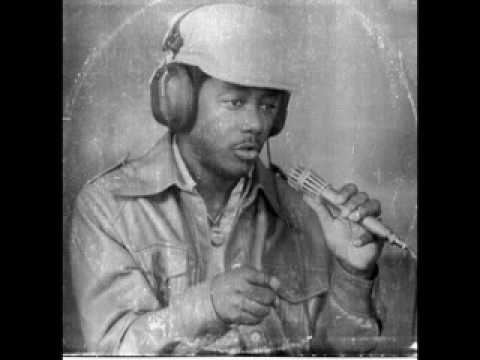
Let me play you “Arleen,” by General Echo, a seven-inch 45 on the Techniques label, produced by Winston Riley, a number one hit in Jamaica in the autumn of 1979. “Arleen” is in the Stalag 17 riddim, a slow, heavy, insinuating track that is nearly all bass—the drums do little more than bracket and punctuate, and the original’s brass-section color has been entirely omitted in this version. I’m not really sure what Echo is saying. It sounds like “Arleen wants to dream with a dream.” A dream within a dream. Whether or not those are his actual words, it is the immediate sense. The riddim is at once liquid and halting, as if it were moving through a dark room filled with hanging draperies, incense and ganja smoke, sluggish and nearly impenetrable air—the bass walks and hurtles. Echo’s delivery is mostly talkover, with just a bit of sing-song at the end of the verse. It is suggestive, seductive, hypnotic, light-footed, veiling questionable designs under a scrim of innocence, or else addled, talking shit in a daze as a result of an injury: “My gal Arleen, she love whipped cream/Every time I check her she cook sardine….”
General Echo, whose real name was Errol Robinson, was prominent in the rise of “slackness,” the sexually explicit reggae style that began to eclipse the Rastafarian “cultural” style in the late 1970s; his songs include “Bathroom Sex” and “I Love to Set Young Crutches on Fire” (“crotches,” that is), as well as “Drunken Master” and “International Year of the Child.” He had his first hit in 1977, put out three albums and a substantial number of singles—an indeterminate number because of the chaos and profusion of Jamaican releases, then as now. Along with two other members of his sound system, he was shot dead on the street by Kingston police in 1980; no one seems to know why.
I bought the record at the time it was on the Jamaican charts, from some punk store in downtown Manhattan. I first heard it at Isaiah’s, a dance club that materialized every Thursday night in a fourth-floor loft on Broadway between Bleecker and Bond. This was a few years before the enormous wave of Jamaican immigration to the United States, which was mainly a phenomenon of the later Eighties and a result of the kind of violence that killed General Echo. Nevertheless the club regulars were more than half Jamaican transplants, nearly all of them men. The walls were lined with impassive types wearing three-piece suits in shades of cream and tan, and broad-brimmed, high-crowned felt hats that looked at once Navaho and Hasidic, with their locks gathered up inside. They danced as if they didn’t want to dance but couldn’t entirely contain themselves—the merest suggestion of movement: a shoulder here, a hip there.
It was hard not to feel judged by this lineup; I kept ratcheting down the enthusiasm level of my dancing. But they didn’t even see me. Whatever else might have been going on in their lives they were, in immemorial fashion, bachelors at a dance, and this gave the club a taste of the grange hall. Sometimes I went there with a girlfriend, sometimes with a group of people. We smoked weed and drank Red Stripe and sometimes inhaled poppers, which would lend you huge brief bursts of euphoric energy and then foreclose, leaving you in a puddle. I hardly ever made it to the 4 AM closing because the next day I had to work, and four hours’ sleep made me feel sick. As a result I missed all the incidents involving guns, which invariably occurred at the end of the night. The club would have to shut down, for weeks or months at a time—it was anyway unclear what went on in the loft the other six nights and seven days; maybe people lived there. Eventually the owners installed a metal detector, the first one I ever encountered, little suspecting they would one day be ubiquitous.
We went there for the bass, and the trance state resulting from hours of dancing to riddim that stretched forever, the groove a fabric of stacked beats fractally splitting into halves of halves of halves of halves, a tree that spread its branches through the body, setting the governor beat in the torso and shaking its tributaries outward and down through shoulders, elbows, hips, knees, feet so that you couldn’t stop except when you collapsed. Most often I went there with E., who danced like a whip, and who could keep on well past my exhaustion limit, and because I needed her I did so, too. Dancing was our chief mode of communication, an intimacy like two people sleeping together in different dreams, our bodies carrying on a conversation while our minds were in eidetic twilight. Neither of us really trusted language with each other, so we found this medium of exchange that trumped it, precluding silence and misunderstanding. She had a small body whose axis was set on powerful hips with an engine’s torque, while above the waist she was all moues and flutters, a belle minus a carnet de bal, so that the sum of her was exactly like the music: the massive horsepower of the bass below and the delicate broken crystal guitar and plaintive childlike melodica above.
We lived in that place called youth where everything is terribly, punishingly final day by day, and at the same time tentative and approximate and subject to preemptive revision. We broke up and got back together, again and again, we lived together or we lived at opposite ends of the island, then she moved west and didn’t come back, and I went out there but elected not to stay. Then her body betrayed her. She became allergic first to television, then to television when it was turned off, then to inactive televisions downstairs or next door, then to recently manufactured objects, then to so many various and apparently random stimuli she became her own book of Leviticus. Then her muscles gave way and she couldn’t dance, then couldn’t walk, then couldn’t speak, and in the end became just a head attached by a string to a useless doll’s body before she stopped being able to swallow and soon after to breathe.
Criticism as advertisement (2009)
BRIAN DILLON Reading your essay ‘Critical Reflections’, in your recent book Art Power, I was reminded of two texts about criticism from the late 19th century. In his essay ‘The Function of Criticism at the Present Time’ (1864) Matthew Arnold writes that the critic’s job is ‘to see the object as in itself it really is’. Twenty-seven years later, in ‘The Critic as Artist’, Oscar Wilde reverses Arnold’s dictum: criticism is rather supposed to ‘see the object as in itself it really is not’. Has this distinction – between criticism as science and criticism as art – gone away, or is it still with us?
BORIS GROYS Both quotations have something to do with description, with the ability of an art critic to describe the art object in a certain way: in one case, to describe it correctly; in the other, to describe it in an interesting way or in a way that is more interesting than the correct description would be. But it seems to me – and it was on my mind when I wrote that text – that description is part of what is expected from criticism, but it’s not the most urgent thing that readers expect. What they expect is a value judgment, from somebody who has more taste than others, rather than a greater ability to describe.
And that’s precisely what seems to me to be in peril at the moment. When I came from the USSR to the West at the beginning of the 1980s, almost immediately I started to write about art for the German newspapers, and I very quickly understood that people reacted only to the fact that I had written a text, that this text was published in the newspaper, had a certain length, was illustrated or not, and was or was not run on the front page of the feuilleton section. They absolutely didn’t react to what I wrote, be it description or evaluation, and they absolutely couldn’t distinguish between positive and negative evaluation. So if they saw, for example, a long text with illustrations on the first page, and it was a negative review, everybody perceived it as a positive review. I understood immediately that the code of contemporary criticism is not plus or minus; I would say it’s a digital code: zero or one, mentioned or not mentioned. And that presupposes a completely different strategy, and a different politics.
BD What, then, are the politics of mentioning or not mentioning an artist?
BG You can escape politics as a theoretician, or as an art historian, but not as a critic. This politics excludes absolutely the possibility of being representative of the public, in whatever sense you understand that. Instead, it presupposes a certain obligation toward artists, curators and so on. You mention people that you like, and you don’t mention the people you don’t like. And you mention people because you like them, and that’s the only reason for mentioning them. If you mention them, it makes no sense to criticize them, because it’s obvious that whatever you say is an advertisement for them. If you don’t like them, you just don’t mention them; if you like them, you just approve them. So the system excludes the phenomenon of negative appreciation: something that has a very long tradition. I don’t have a feeling that negative art criticism is something people do very much now. So today’s criticism mostly does not function as a critique. Today artists want to be critical – but art criticism is almost always affirmative. It is affirmative, for example, by siding itself with art that wants to be critical.
BD It seems as though, on the one hand, criticism has lost its commitment to advancing an argument or ideology, and on the other, that critics are no longer eager to appear paradoxical: that is, to contradict themselves, even to appear hypocritical.
BG You can be hypocritical only if you say something you don’t believe in. The question is whether criticism today is a statement about one’s beliefs at all. Cultural production is based on memory: we have known that since Plato. And today, I’d say, we have lost our memories, and memory has been replaced by Google. Instead of memorizing, we are Googling. And that’s precisely what the art critic is doing. The critic creates a search engine for the reader; fundamentally, he just says, ‘Look at this!’ Whatever is said beyond this is perceived merely as an explanation or legitimization of this advice to look. People are not so interested in why they should look at it; they’re interested in the question of whether they should look at it at all. They’re also not interested in the critic’s opinion, but in whether they should have an opinion themselves about this phenomenon. I’m often asked by colleagues: ‘Should I look at this exhibition or should I skip it?’ There is a certain honesty in this: maybe there’s no reason to look at it…
BD The question ‘Should I look at it?’ suggests that, rather than enjoying or being fulfilled or improved or educated by the art object, one takes something useful from it: ideas or images that can be put to use elsewhere.
BG That’s too charitable an explanation. The question is: would you get lost in a conversation if you didn’t know the phenomenon in question? There are works and exhibitions and books that may well be awful – maybe not – but you have to have an opinion about them because, if you don’t, you are perceived as being uninformed and out of touch with whatever definition of contemporaneity you are faced with. Of course, there are a lot of things that don’t have this urgency: if I say I’m too busy to look at them, I’m forgiven for that. But with some images, some exhibitions, some books, you are not forgiven for being too busy to look into them. If I’m asked should I look at it or not, I always ponder the question seriously: would I be forgiven for not looking at this?
BD You write that the critic of the late 18th and early 19th centuries affected to makes value judgements on the basis of knowledge. He also wrote from outside the art world and deliberately distanced himself from artists. The Modernist or avant-garde critic, on the other hand, claims to speak for the art work, or for the artist. You suggest, however, that the critic is subsequently rejected by artists, whose work may very well speak for itself. How did this happen?
BG The critic has a fear and a desire, like everybody in this cultural system: he is afraid of appearing to be uninformed, not up-to-date. So he has to mention Slavoj Zizek and Alain Badiou, he has to have an opinion about Jacques Rancière, he has to know that, in contrast to yesterday, it’s not a good idea to mention Jacques Derrida but it’s a good idea to mention Gilles Deleuze and so on. So he has to be informed and to show explicitly that he is informed: that’s one source of his habit of mentioning. He mentions these people not because he’s interested in them, but because he shows that he belongs to a certain level of discourse. Then, after he establishes himself, he asks himself why and what he wants to advertise to the public.
I don’t believe in neutrality. There’s no objectivity in art. Art is not a system, not a world: it’s an area of struggle and conflict, of competition, animosity and suspicion. That’s why I’m always irritated by any systemic approach to art: as though art production is like shoe production. You have to decide what you want to advertise, what your ideological position is, what you want to make known. Of course, you’re no longer interested in criticizing anything; you’re interested in forwarding what you think is interesting for you, what should be regarded as interesting for culture in which you are living, what you’re ready to support. If you make a bad judgement, and support something that fails in a non-interesting way – because it may fail interestingly – then it was a bad choice. It’s about taking risks.
Quibbles and bits
Reading this much of a critic’s work will also alert you to his tics. Lane has only one that annoys me: He will cross the street, walk around the block, catch a cross-town bus and wait in line for an hour to make a dopey pun, and unfortunately we are forced to go with him. For the pun-averse this can sometimes feel like engaging in one of those seemingly straightforward conversations that turns out to be the wind-up for an evangelical pitch or an obscene phone call; you wonder if Lane has enticed you through a whole paragraph on “Braveheart” solely so he can hit you with a groaner like “Fast, Pussycat! Kilt! Kilt!”
Samuel Johnson on Shakespeare:
Shakespeare with his excellencies has likewise faults . . . A quibble is to Shakespeare, what luminous vapours are to the traveller; he follows it at all adventures; it is sure to lead him out of his way, and sure to engulf him in the mire. It has some malignant power over his mind, and its fascinations are irresistible. Whatever be the dignity or profundity of his disquisition, whether he be enlarging knowledge or exalting affection, whether he be amusing attention with incidents, or enchaining it in suspense, let but a quibble spring up before him, and he leaves his work unfinished. A quibble is the golden apple for which he will always turn aside from his career, or stoop from his elevation. A quibble, poor and barren as it is, gave him such delight, that he was content to purchase it, by the sacrifice of reason, propriety and truth. A quibble was to him the fatal Cleopatra for which he lost the world, and was content to lose it.
Pattern and aboutness
We tend to read a novel first for plot and character and the narrative’s relation to reality, what post-Saussurean critics call its “aboutness,” and only secondarily, if at all, for pattern. This is a little like Ludwig Wittgenstein’s duck-rabbit argument. You know how you can draw a little circular figure with an elongation here and a dot there. If you squint your eyes one way, you can see it’s a rabbit with long ears. But if you squint another way, it becomes a duck with a protruding beak. With poems and novels, you can read for pattern or you can read for aboutness, depending on how you squint your eyes.
It happens to be the case, though, that we rarely read novels for patterns. One reason for this is that the novel’s very aboutness gets in the way. It is the easiest and most natural thing in the world to read a novel for plot and character. In fact, in most cases you have to read for plot and character in order to situate yourself, as an observer, in the world of the novel. The shift of focus, the new squint, if you will, from plot to pattern only happens on rereading. A good reader, as Nabokov wrote in his essay “How to Read, How to Write,” is a rereader.
When we read a book for the first time the very process of laboriously moving our eyes from left to right, line after line, page after page, this complicated physical work upon the book, the very process of learning in terms of space and time what the book is about, this stands between us and the artistic appreciation. When we look at a painting we do not have to move our eyes in a special way even if, as in a book, the picture contains elements of depth and development. The element of time does not really enter in a first contact with a painting. In reading a book, we must have time to acquaint ourselves with it. We have no physical organ (as we have one in regard to the eye in a painting) that takes in the whole picture and then can enjoy the details. But at a second, or third, or fourth reading we do, in a sense, behave toward the book as we do toward a painting.
When Nabokov makes a distinction between “what the book is about” and our “artistic appreciation” of the book, he is separating our reading of the subject, story and characters — the book’s aboutness — from our appreciation of the book’s so-called artistic qualities, the details we would notice if we looked at a novel the way we look at a painting.
Nabokov assumes that we all look at paintings for more than the resemblance they bear to old dead people in funny clothes, for more than romantic seascapes and sunsets. He assumes that we see, for example, Whistler’s mother as something other than an elderly lady in a plain black dress and that we know, perhaps, that the painting of Whistler’s mother was originally titled “Arrangement in Grey and Black” and that when Whistler talked about painting he would say, as he did in a letter to his friend Fantin-Latour:
…it seems to me that color ought to be, as it were, embroidered on the canvas, that is to say, the same color ought to appear in the picture continually here and there, in the same way that a thread appears in an embroidery, and so should all the others, more or less according to their importance; in this way the whole will form a harmony.
Whistler is talking about patterns, patterns of color that exist over and above and through the subject of the picture, its aboutness. And when Nabokov talks about “artistic appreciation,” he is talking about appreciating the patterns of the novel in the same way, the repetition of certain verbal events or structures in a novel like the colors in a painting. This is precisely the way we appreciate poetry, where it is, as I have said, much easier to see that sounds and words are like oil paints or, for that matter, like notes in a piece of music…
What they did was put a theory to the things painters like Whistler and, soon after, the French Impressionists, and Surrealist poets like Breton, Eluard and Ponge — all the way back to Mallarme (Nabokov sneaks Mallarme quotations into his novels) — had been doing ten, twenty, thirty or more years before. They simply recognized that aboutness and pattern were two aspects of the things we call art and language, and that you could, in fact, have pattern without aboutness.
Since it seem impossible to have aboutness without pattern, a corollary of this is that aboutness is somehow secondary, a poor cousin, on the aesthetic scale of things, to pattern. Nabokov again:
There are…two varieties of imagination in the reader’s case… First, there is the comparatively lowly kind which turns for support to the simple emotions and is of a definitely personal nature… A situation in a book is intensely felt because it reminds us of something that happened to us or to someone we know or knew. Or, again, a reader treasures a book mainly because it evokes a country, a landscape, a mode of living which he nostalgically recalls as part of his own past. Or, and this is the worst thing a reader can do, he identifies himself with a character in the book. This lowly variety is not the kind of imagination I would like readers to use.
This is what the post-Sausurrean critics, recently so popular in Europe and on American university campuses, are saying. Aboutness is old-fashioned, authoritarian, and patriarchal. Signs — read, pattern, poetry — are playful, subversive, and female. How a thinker can jump from a purely logical incongruence — the fact that, apparently, you can have pattern without aboutness but not vice versa — to these strings of value-loaded predicates is marvelous indeed and evidence that the instinct for narrative and romance has not died behind the ivy-covered walls of academe.
Another corollary of splitting the categories of pattern and aboutness is that there is a sense in which pattern itself creates meaning. Or to put it another way, the novel is about its own form. Or every book is about another book, or books. And every work of art is a message on a string of messages which begins nowhere and ends nowhere, to no one and from no one, and about nothing except the field of pseudo-meaning created by previous and future messages. It is all a game of mirrors and echoes. A little dance of images, words, and patterns. The of the Hindus, or all is vanity, all is dust, sure enough.
Keats wrote, “A man’s life is an allegory.” Nothing else. Or conversely, Korzybski says, “The map (read, the allegory, the pattern, the words) is not the territory.” Which is to say, as Jacques Lacan does, that all utterances are symptomatic and that the real is impossible.
From Otto Friedrich, City of Nets: A Portrait of Hollywood in the 1940s (1986):
In Hollywood [c. 1941] there were no censors, no storm troopers, no interest in controversy or politics of any sort. This was the place dominated by Louis B. Mayer, and Mayer liked Andy Hardy movies. Brecht remained Brecht. He read in a copy of Life that an Ohio farmer named Frank Engles had been selected, together with his wife and three children, as the state’s “most typical farm family,” and that the Edgeless had been hired to spend a week living their typical family lives in a model home at the Ohio State Fair. Brecht thought it would be interesting to to imagine what would happen if Ohio’s typical family should start quarreling bitterly on the night before the state fair opened, and then smashed up the model home that had been prepared for them.
And then there was bread. Brot. The tastelessness that emerged from the American assembly lines seemed to the exile from Berlin to symbolize everything that was lacking in American society.
Back in the 1920s, Brecht had started an adaptation of The Pit, Frank Norris’s epic novel about the extravagances of the Chicago wheat exchange, but what had interested Brecht was not the wheat exchange as such but the corrupting process that separated the growing of wheat from the final loaf. As in his Saint Joan of the Stockyards, he wanted to pit the soulless entrepreneur, Joe Fleischhacker, against the humble creator, the baker, and to dramatize the creator’s triumph over the merchants. After a long talk with a German-American writer named Ferdinand Reyher, Brecht wrote in his Arbeitsjournal: “I tell Reyher the plan for the Joe Fleischhacker in Chicago, and in a couple of hours we develop a film story, The Bread King Learns Bread Baking. There is no real bread in the States, and I really like to eat bread: my main meal is at night, and it is bread and butter. R thinks the Americans have always been nomads, and nomads understand nothing about eating.” The idea of these two nomad writers was that Joe Fleischhacker, the villainous millionaire, should find happiness in munching bread baked by a poor farmer’s wife. When he tried to buy her recipe, waving his checkbook as a weapon, he was told that good bread required not only good flour but “one day of good work; one world of good neighbors; a heart of good will; and a good appetite.”
Brecht finished this peculiar scenario on a Saturday night in October of 1941, and he was so pleased with himself that he hurried over to MGM the following Tuesday to present his creation to Max Reinhardt’s don, Gottfried, who was then working as an assistant to one of the studio’s leading producers, Bernie Hyman. “For an hour and a half,” Reinhardt recalled, “Brecht fascinated me in his unalloyed Augsburg dialect with a film story about the production, distribution, and enjoyment of bread… He had the right man but the wrong place, and he had no illusions when I said as he left that I would try my best to sell the story.” Reinhardt apparently did make some effort to interest MGM in Brecht’s idea, but the results were predictable. Brecht’s scenario, Reinhardt later observed, “had as much chance of being sold to MGM as ‘Gone with the Wind’ had of being played at the Berliner Ensemble.”
But Brecht did have illusions. He registered his idea about bread at the Screen Writers Guild to protect his claims on it. And his journal records at the end of 1941 include a frantic assortment of movie projects: a biography of the labor leader Samuel Gompers, which William Dieterle hoped to direct; an adapatation of Arthur Schnitzler’s comedy Reigen, which was supposed to interest Charles Boyer; a lost work known as Days of Fire. The journal even contains lists of Brechtian titles: Refugees Both, The Senator’s Conscience, The Traitor, and … Boy Meets Girl, So What?
“Again and again,” Brecht wrote, “seeking a living, I am told:
Show us what you’re made of
Lay it on the table!
Deliver the goods!
Say something to inspire us! Tell us of your own greatness!
Divine our secret desires!
Show us the way out
Make yourself useful!
Deliver the goods!