Search for ‘MATT ’ (136 articles found)
Auden reviews Tolkien
Auden reviewing part III of Lord of the Rings:
To present the conflict between Good and Evil as a war in which the good side is ultimately victorious is a ticklish business. Our historical experience tells us that physical power and, to a large extent, mental power are morally neutral and effectively real: wars are won by the stronger side, just or unjust. At the same time most of us believe that the essence of the Good is love and freedom so that Good cannot impose itself by force without ceasing to be good.
The battles in the Apocalypse and “Paradise Lost,” for example, are hard to stomach because of the conjunction of two incompatible notions of Deity, of a God of Love who creates free beings who can reject his love and of a God of absolute Power whom none can withstand. Mr. Tolkien is not as great a writer as Milton, but in this matter he has succeeded where Milton failed. As readers of the preceding volumes will remember, the situation n the War of the Ring is as follows: Chance, or Providence, has put the Ring in the hands of the representatives of Good, Elrond, Gandalf, Aragorn. By using it they could destroy Sauron, the incarnation of evil, but at the cost of becoming his successor. If Sauron recovers the Ring, his victory will be immediate and complete, but even without it his power is greater than any his enemies can bring against him, so that, unless Frodo succeeds in destroying the Ring, Sauron must win.
Evil, that is, has every advantage but one-it is inferior in imagination. Good can imagine the possibility of becoming evil-hence the refusal of Gandalf and Aragorn to use the Ring-but Evil, defiantly chosen, can no longer imagine anything but itself.
This idea appears repackaged in a much later poem on the Soviet invasion of Prague:
August 1968
The Ogre does what ogres can,
Deeds quite impossible for Man,
But one prize is beyond his reach,
The Ogre cannot master Speech:
About a subjugated plain,
Among its desperate and slain,
The Ogre stalks with hands on hips,
While drivel gushes from his lips.
I doubt that Auden meant the analogy between Sauron and Brezhnev seriously; this is just an example of his inveterate recycling habit — lines in the early verse, as someone said, lived a migratory existence, and similarly with ideas in the later work. And while it is smug to think of one’s opponents as morons, I think the connection here is interesting because it draws what was — to me — an unexpected parallel between LOTR and, say, The Good Soldier Svejk, in this notion that the hero of a quest is a middling, perhaps even a picaresque, character (picaro meaning rogue) flitting between the ogre’s blind spots. And there are connections with fairy tales as well, esp. the notion of the “third son” (another Auden obsession) who is not outwardly promising but is fated to win the princess.
What’s different about LOTR, I suppose, is the ethical choice to fight left-handed. It would be wrong to ignore this aspect of the books, but it does seem to me that the basic “solution” to the problem of evil that’s suggested here is that good, by choice or necessity, is effectively not omnipotent.
This connection also brings up a question I’ve never found a satisfactory answer to, which is whether the difference between picaresque and Odyssey-style epic — which is to say, most epic and quest literature; any long work of fiction in which “unity of action” is impossible and a lot of the events are there to flesh out and diversify the fictional world — is one of narrative emphasis or of structure/storyline. Could one rewrite LOTR as a picaresque in which Frodo and Sam go into the world looking for adventure and in which the ring business is a pretext for their exploring the world? How much would one have to change the plot? Similarly, how essential a plot device is Odysseus’s homesickness or Aeneas’s plodding sense of duty? Why can’t a picaresque be an epic quest for money and a spouse? (Much of Malory is akin to picaresque in its lack of direction.) Is it that the ending of one is intrinsically more provisional because the wheel of fortune keeps turning but Troy/Sauron won’t rise again?
Could one make an RPG based on Candide?
In the Heart of the Heart of a Color (1976)
In its reliance here on metaphor, language shows us how separate its function must always be from that of sensation. The philosopher’s point Mr. Gass wishes to make in literary terms is that style is not just an addition to language but its essential nature: it enables us to inhabit “the blue” in a literal sense by removing us into the perspective of the sky, away from the earth. Rilke remarked that sex “requires a progressive shortening of the senses.” “I can hear you for blocks,” quips Mr. Gass. “I can smell you, maybe, for a few feet, but I can only touch you on contact. A flashlight held against the skin might as well be off. Art, like light, needs distance, and anyone who attempts to render sexual experience directly must face the fact that the writhings which comprise it are ludicrous without their subjective content…that there is no major art that works close in.” As Yeats put it, and Mr. Gass might well agree, “the tragedy of sexual intercourse is the perpetual virginity of the soul”; but it is the glory and the justification of “blue” language to remain perpetually virgin.
Undeniable; and yet blue can also be for danger, though Mr. Gass would not admit it. Blue boys can want the external world for one thing only—the words they can have it off with. Mr. Gass’s blue style is ideally pornographic because in it “there’s one body only…the body of your work itself.” The country of the blue, while it suggests so well that enchanted space where matter exists in words, is also self-insulating and self-gratifying. That is the risk run by Virginia Woolf as well as by modern stylists and disciples of the blue—Updike, Stanley Elkin (from whose novel, “A Bad Man,” Mr. Gass supplies a savorous quotation) and Mr. Gass himself. The truer stylist— Hardy, James Joyce—has too wide a repertory to play only on what Wallace Stevens called “the blue guitar.” “Ulysses” is made not out of blue but out of Bloom—a man and his meaning. Great writing has in it all colors: Mr. Gass’s favorites manage only one, though he gives himself and us a nice ride over the rainbow.
'Spirit Duplication,' Yara Flores
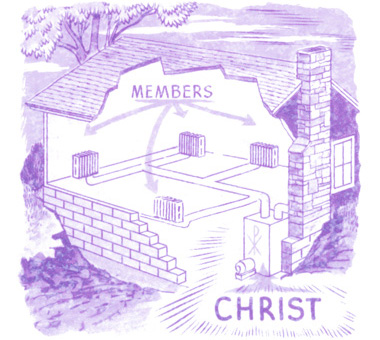
…The ditto machine, or “spirit duplicator” as it is more properly known, was a manually cranked drum-printing device originally developed in the 1920s. It worked from a special “master” that looked a little like a piece of carbon paper. This was in fact a sandwich of acetate and a thin tablet of deep purple wax. When you typed or wrote on the master, the wax stuck to the back of the cover page, producing a waxy negative of your original. This was then fixed, wax side out, to the revolving drum. As the machine went to work, the sheets of paper to be printed were individually wetted with a highly volatile mixture of isopropyl alcohol and methanol. Touching the roller, this combustible and intoxicating broth instantly dissolved the colored wax from the master, leaving a purple trace of every word.
Xerographic duplication, by contrast, is an electrostatic process, and makes use of bright light to recreate the original in a pattern of negatively and positively charged regions. A positively charged powder adheres to the negative bits of this pattern, which correspond to the dark parts of the original. Heat cooks this black dust onto the blank page, creating the copy.
I did not like the new copies. There was the disconcerting matter of the powdery toner. One of my first sheets, incompletely fused, vanished at the touch of my finger. Not encouraging, from a catechistical perspective.
But even worse was the dryness. Sheets fresh from the ditto machine came doused with their intoxicating vehicle. They were limp and delicate and heady. One breathed deeply, and felt a lightness of the spirit. Like the page, one was softened to receive the purple words.
By contrast, these strange new handouts were made of static ash, of a nervous kind of soot. They felt brittle, dusty, lifeless. Without the penetrating aroma of naphtha, the dialogic doctrines felt strangely inert. Absent the lurid aniline purple—redolent of both Tyrian splendor and cruel wounds—the blackletter teachings took on a dour formality.
On "My Beautiful Dark Twisted Fantasy"

In AIM conversation with Kris Ex.
Exo: grand statement alert:
Exo: Kanye’s most emblematic quality has been his willingness to speak ego to power. that’s sorely missed by me on MBDTF.
Noz: who said that
Exo: that’s my observation
Exo: and also the type of analysis that gets lost in the “it’s great! first!” type of criticism
Noz: you don’t think “power” did that?
Exo: exactly why it’s missed
Exo: because he ignores that voice for the rest of the album
Noz: that’s a fair critique
Noz: i need to spend more time with the lyrics
Noz: or maybe i don’t?
Noz: right now i’m more interested in the album as a production statement
Exo: that’s my issue with a lot of this
Exo: and a lot of what goes on with OFWGKTA and much of criticism
Exo: whether Gucci or Waka or whomever
Exo: i don’t feel that the narrative can be divorced from the art
Noz: not divorced
Noz: but you can certainly focus on one not the other
Exo: i feel it happens too much with the critics
Noz: well with kanye
Noz: i still think of him as a producer first
Noz: which i know is really a narrow and deluded line of thought
Exo: not totally
Exo: i think of him as a producer first
Noz: i think a lot of what this album is doing too is him trying to ease into more of a dr. dre role
Noz: where he orchestrates an ensemble album
Exo: but, as a writer more than a critic, the idea of narrative is tantamount to me at this stage in my life
Noz: understandable
Noz: so enjoy watching matt lauer clips while i listen to music
Exo: not sure how you get that
Exo: to me narrative is in the music
Exo: whether you’re Flocka, Ross, Diddy, Taylor Swift or BEP
Exo: everybody’s selling something
Noz: you are saying that “blame game” lacks a narrative?
Noz: or that it’s not the narrative you want/expect from kanye?
Exo: i’m saying that his narrative before was highly autobiographical
Exo: now it’s “fantasy”
Exo: and hidden behind posse cuts
Exo: all of the lights, monster, appalled, etc.
Noz: yeah that’s where the album dips for me
Exo: you’re correct that this album seems more interested in making musical and sonic statement
Exo: it seems to lack the theme and cohesion of hsi past records
Noz: see to me his past records were short on sonic cohesion
Noz: and i think more often than not his theme can be summed up in a single song
Noz: ie “all falls down”
Noz: or “power” here, i guess
Exo: i think the theme here is “Runaway”
Noz: yeah that might be more accurate
Exo: i would love to hear the “Power” album
Exo: and i guess that’s what i’m saying is missing
Noz: hasn’t he already made the “Power” album though?
Noz: wasn’t that graduation?
Noz: (that’s not a rhetorical question – i haven’t listened to graduation in years so i can’t say for myself)
Exo: i think he’s reached whole new heights since that album
Exo: graduation was still bitching from a seat at the table
Exo: now he’s firmly ensconced in the proceedings
Exo: has a reserved parking spot and all
Noz: fair enough
Noz: i think it amounts to us wanting different things from kanye
Noz: i’m not really interested in lady gaga style TREATISE ON AMERICAN CELEBRITY rap
Noz: even though i will say that kanye does that better than just about anyone on earth
Exo: it just feels like a retreat
Exo: i can be wrong
Exo: and i still have yet to sit with it in any significant way
Noz: it’s forward musically
Exo: yet it feels like he’s hiding behind the music
Exo: which makes it hard for me to totally get into in many ways
Noz: and maybe that’s why i am into it
The battles for late night
And yet men have always gone to war over late night. The “Tonight Show” is like the Tudor dynasty—from the beginning, nothing but succession troubles. The man who made it all matter—for Leno, Letterman, and O’Brien—was Johnny Carson. Carson had himself replaced a television legend, Jack Paar. In its earliest incarnations, “Tonight” had been routinely clobbered in its time slot by old movies, but in 1957 Paar took custody of the show and turned it into a reliable source of revenue for NBC. Carson’s bona fides were somewhat sketchy. His own variety program, “The Johnny Carson Show,” had been cancelled, after a single season, in 1956. When NBC offered him “Tonight,” in 1962, he was hosting a daytime quiz show on ABC called “Who Do You Trust?,” a knockoff of Groucho Marx’s long-running “You Bet Your Life.”
NBC had considered Groucho—also Bob Newhart, Jackie Gleason, and Joey Bishop—as the host for “Tonight” before approaching Carson. But he was a hit from the start. By the end of his first year, he was drawing an average of seven and a half million viewers, twice the size of Paar’s audience. And the pie just kept on growing. By 1965, the “Tonight Show” was reported to be out-earning NBC’s entire prime-time schedule.
This got the attention of the other networks. The “Tonight Show” was a programming novelty. Most of the early television executives came from radio, where late night had never inspired much advertiser interest. In the nineteen-fifties, some television stations simply played “The Star-Spangled Banner” after the eleven-o’clock news and went off the air. The man of vision in this area was Sylvester (Pat) Weaver, the vice-president and later the president of NBC. Seeing opportunity in the fringes, he created both “Today,” in 1952, with Dave Garroway as the host, and “Tonight,” in 1954, with Steve Allen. (He was also one half of the team that brought us Sigourney Weaver.)
Weaver was a Dartmouth philosophy major; his boss, the redoubtable David Sarnoff, president of RCA, which owned NBC, had never gone to college. Weaver believed that television could be “an enlightenment machine.” He fought against what he called “the robotry of habit viewing,” and opposed giving the schedule over to soap operas and situation comedies, generic staples of radio. He invented the special: his theory was that a large number of people will tune in to a program if there is buzz about it. The theory seemed to be paying off—NBC’s broadcast of the Broadway “Peter Pan,” with Mary Martin, attracted sixty-five million viewers, almost forty per cent of the entire population—when, in 1955, Sarnoff removed Weaver from the presidency to make room for his son. For the next twenty years, CBS, which had no compunctions about stuffing its schedule full of soap operas and situation comedies, ate NBC’s lunch.
The theory at CBS was the reverse of Weaver’s. It was that people don’t watch programs; they watch television. The job is only to have your show be the one they end up watching once they turn the set on. They don’t have to feel good about themselves for watching your show; they don’t even have to like it. What Weaver deprecated as “habit viewing” was just what CBS was looking to exploit. At NBC, the policy was referred to, contemptuously, as LOP—Least Objectionable Program—but it worked. CBS broadcast, in prime time, “I Love Lucy,” “Mister Ed,” “My Favorite Martian,” “Gilligan’s Island,” “The Beverly Hillbillies,” and “The Munsters,” all of them about as dumb as they come, and all of them huge hits. From 1962 to 1964, fifty-seven million Americans tuned in to watch “The Beverly Hillbillies” every week.
Neither CBS nor ABC gave much thought to late night until Carson showed the entertainment world that there was gold in those distant hills. They had been earning little or nothing after eleven o’clock, generally giving the time to their affiliates, who sold the commercials and ran old movies. In 1964, though, CBS and ABC started looking for talent to go up against Carson and NBC. Between 1964 and 1972, a number of men were pushed into the arena. One of them was Dick Cavett.
Marilyn Monroe's Stuffing

Scrawled on stationery with a letterhead from a title insurance company, the recipe describes in some detail how to prepare a stuffing for chicken or turkey. The formula is extensive in the number of ingredients (11, not including the 5 herbs and spices, or salt and pepper), and in their diversity (3 kinds of nuts and 3 animal proteins). It is unorthodox for an American stuffing in its use of a bread loaf soaked in water, wrung dry and shredded, and in its lack of added fat, broth, raw egg or any other binder.
It also bears the unmistakable balance of fussiness and flexibility that is the hallmark of an experienced and confident cook. Giblets are to be “liver-heart,” and the beef is to be “browned (no oil),” yet certain other details are left flapping in the wind: the amount of spices is not specified, nor the amount of “parsarly.” O.K., the instruction of “1 handful” of grated Parmesan is clear enough, but what to make of the first line — “No garlic” — of the recipe?
T.J. Clark, 'Modernism, Postmodernism, Steam'
Let me say again what I said at the start. I do not know the art of the present well enough to be able to ask questions of it with any authority; but I think I know the art of the previous era well enough to know what questions ought to be asked. I have been arguing that modernism wished to understand, and put under real pressure, the deep structure of belief of its own historical moment—those things about itself that modernity most took for granted, or most wished were true. The pressure was formal. The beliefs would survive the test of the medium, or they would disintegrate. Mostly, it seems, they disintegrated. Modernism was modernity’s official opposition. It was the pessimist to modernity’s eternal optimism. It cultivated extremism—it seems as an answer to modern life’s pragmatism and technicality (which of course most modernists also loved). Technique in modernism was not problem-solving. It made problems worse.
The question to put to the art of the present, then, is what does that art appear to see as the beliefs in the culture of our own moment that are similarly structural, similarly the core of our present ideology; and how does art envisage putting those beliefs to the test? I have talked somewhat generally about “beliefs,” but of course for visual artists it is beliefs about vision and visualization that count, or, rather, beliefs that take the form of images—of fresh modes of visibility, or dreams of knowledge arranging itself in specifically visual form. We all know that such beliefs are at present the cutting edge of a new myth of modernization. Oursler is typical here. Any artist with smarts is going to see that the dream life that matters currently is the one promoted by the World Wide Web. But how is that dream life going to be put under real pressure? We are back to the problem implied by Marx’s “Teach the petrified forms how to dance by singing them their own song.” Mimicry is not enough. Nor is hectoring from the outside. It has to be singing. But singing involves hitting the right note, being exactly on key. It involves not an approximate knowledge of what the age of the digital believes about itself, but an intuition (of the kind that Manet and de Chirico managed) of precisely the central knot in the dream life—the founding assumption, the true structure of dream-visualization. It is easy to fake modernity’s uncanny. Modernity, as Benjamin reminds us, has thrived from the very beginning on a cheap spectacle of the strange, the new, the phantasmagoric. But modernity also truly dreams. The art that survives is the art that lays hold of the primary process, not the surface image-flow. …
Just as Manet, with one side of himself, fell for the notion of capitalism as pure realm of appearance, present-day visual artists can hardly avoid the glamour of the notion that the verbal is over and the visual has replaced it. But just as Manet in practice discovered that the realm of appearances was also one of identities, fixities, constraints, and determinations, I dare to predict that once the present ecstasy of the virtual and nonverbal is put to the test of form, it too will be found wanting. And I shall stop pretending to be neutral and say why. I shall end by offering artists of the present a few antivisual, antidigital slogans.
Nothing could be further from the truth than the idea that the age of the Word is finished. On the contrary, words are still everywhere. And the image machinery we have created and disseminated is just a means for making those words over into images—that is the trouble with it. The ghost abominates the current means of visualization in the culture not out of nostalgic “logocentricity,” but because it sees our present means of symbolic production as essentially flooding the world with verbiage—with the simplest of words (the most banal and transparent of knowledge-motifs) given sufficient visual form. Sufficient, that is, for the motifs to make their hit, name their product, push the right paranoid button. Everything about the actual configuration of image-making in the world around us speaks to that fact. The system’s notions of image clarity, of image flow and image density—they are all essentially modeled on the parallel (and unimpeded) movements of the logo, the compressed pseudonarrative of the TV commercial, the product slogan, the sound bite. Images are still everywhere telling stories or issuing orders. Web pages, billboards, and video games are just visualizations—magnifications and speed-ups—of this prior and continuing world of the shouted (or whispered) sentence.
And at least [this] bitterness points to a complex of problems which, for the moment, our culture wishes not to recognize. If there is to be a visual art of postmodernity, in other words, I think it will have to begin from [anger, skepticism]. It will have to probe, as Manet and Picasso did, at the concepts that truly organize—that produce—our present fictions of the now. Once upon a time that meant mobility, and the free play of appearances, and the great myth of individuality. Those were Manet’s and Picasso’s raw materials. Nowadays it is the notions of virtuality and visuality. It is time this imaginary was put to the test of form.
"Vows"--Ariana Rockefeller and Matthew Bucklin
A puff of white cloud strayed across a powder-blue sky as Ms. Rockefeller walked the aisle of fresh cut grass in a Monique Lhuillier embroidered lace sheath gown and floor-length veil.
The Rev. Mary B. Johnstone, an Episcopal priest, led Ms. Rockefeller and Mr. Bucklin in their vows on an altar of moss-covered granite before an 11-foot limestone Chinese pagoda.
The bride looked serene and strong as the couple stood side by side, framed by two white birch trees gently bending toward each other, their branches entwined.
Jonathan Rosenbaum: on Peter Greenaway

Greenaway’s obsessive reliance on structural systems — perspective (The Draughtsman’s Contract), the alphabet (A Zed & Two Noughts), numbers (Drowning by Numbers), and color-coding here — never functions as a means of exploration or discovery in the way that (for instance) the systems in Michael Snow’s experimental “structural films” like Wavelength, Back and Forth, and La Region Centrale do; they suggest the somewhat desperate tactics of a control freak who doesn’t really believe in or feel comfortable with narrative, but has to use it anyway to get his pictures financed and shown. They become, in effect, recipes for filming by numbers.
One can still enjoy Greenaway’s sarcasm and aesthetic eccentricity up to a point, if only because his intelligence, his art-history background, and his craft all provide a certain novelty in the art-film terrain that he has claimed since The Draughtsman’s Contract. That film had a pleasurable puzzlelike aspect and an intriguingly grim view of art patronage that fit in nicely with the handsome visuals and the cruel eroticism and wit, even if the laughter that greeted its showings often had an ugly and dehumanized sound to it. I got even more kicks out of A Zed & Two Noughts, my favorite Greenaway film, because of the sheer perversity, beauty, and complexity of its multifaceted conception. But I walked out of The Belly of an Architect, bored silly by the symmetrical center-framing and the turgidity of Greenaway’s preoccupation with midlife sexual crises, and even though I stayed to the end of Drowning by Numbers, I was just as bored by the mechanical jokes, conceits, and cruelties that made up the bulk of that film.
The Cook, the Thief, His Wife & Her Lover is in no way inferior to these last two films, though it’s highly likely that one’s attitude toward it will be determined by how many times one has already ridden through Greenaway’s narrow and maliciously nuanced structural exercises. If you would enjoy a sadistic filmmaker calling you a cannibal for sitting through two hours of attractively framed nastiness and abuse, you might find this picture to be right up your alley.
Greenaway’s frozen and aristocratic sense of irony — a major part of his equipment, and my major bone of contention — puts quotation marks around virtually everything that we see and hear; but without a context for this irony, we wind up responding to it as if it were a wallpaper pattern rather than an existential position, a dandified form of decoration that is too willful to be very funny, much less witty. If Greenaway were producing only wallpaper, I’d have no reason for complaint; by the same token, if making movies were a matter of academic achievement — showing how well he’s learned his lessons — I’d give him an A plus. Sergei Eisenstein once quipped of Lewis Milestone’s All Quiet on the Western Front, “It’s a good PhD thesis” — quite unfairly, in my opinion, because that film has both an emotional directness and an academic clunkiness that his remark overlooked, the precise opposite of what Greenaway has to offer. I couldn’t call The Cook, the Thief, His Wife & Her Lover a good PhD thesis because it has nothing serious to prove, but I wouldn’t hesitate to admit that it’s immaculately researched, conscientiously footnoted, and perfectly typed.
Football as Before
Zinadine Zidane: If you want my shirt so badly, I’ll give it to you after the game.
Marco Materazzi: I’d prefer your sister’s.
Before he became famous for headbutting, Zinadine Zidane was actually known for his composure. At Bordeaux, Juventus, and Real Madrid, his hallmarks as a midfielder were Spartan efficiency of movement, incisive passing, and magnetic control of the ball in tight circumstances. Unlike Pele or Maradona (the greats who came before him) and Chrisiano Ronaldo (probably the most outstanding player since), Zidane wasn’t particularly flashy. When France won the ’98 World Cup, he didn’t even score until the final, against Brazil, when he converted two corner kicks with unfussy, short-range headers to make it 2-0 by half-time. He was known to complete the occasional 360-degree turn, and he did have some smart footwork, but overall, he was more metronome than drum solo. His way of controlling the game was to control—and then suddenly change—the tempo.
In this sense, the real-time structure of Phillipe Parreno and Douglas Gordon’s 2006 movie, Zidane: A 21st Century Portrait, was somewhat suited to the Frenchman. With the 90-minute montage (assembled from seventeen cameras placed around the 80,000-person capacity Santiago Bernabeu stadium) focusing entirely on Zidane, even soccer aficionados suffered through spells of cinematic stasis that exceeded the sport’s native tedium. Interrupted only by a few clips from the original TV broadcast, and occasionally augmented by the pleasing Mogwai soundtrack, the iconic image of Zidane himself—sometimes grunting, sometimes sprinting, but mainly just jogging and looking around—was meant to sustain viewers for the full hour and a half.
Usually citing the cool music, or Zidane’s gladiatorial good looks, people uninterested in soccer have often told me the movie exceeded their expectations. For die-hard fans, on the other hand, the film was something of a disappointment. It was hard to put your finger on, but something was missing. It wasn’t only the lack of suspense that came from knowing that Real Madrid would beat Villareal—many of us happily watch taped replays, tributes to past legends, countless Youtube clips. And it wasn’t exactly that we couldn’t see the other players—in fact, David Beckham and Juan Carlos both had entertaining cameos, coaxing laughter from the otherwise stoical Zidane. And there was no lack of sporting drama: Zidane chipped the ball to Ronaldo for a crucial goal, and curiously, in the closing minutes of the April 23, 2005 match Gordon and Parreno happened to record, the leading man was sent off for brawling.
But even before the portentous red card, Zidane’s essence as a player was omitted from the film. Although his chiseled body and strong personality were both impressively larger than life on the silver screen—you could study his scowl, his famous hairline, his quicksilver feet—the attributes that mattered to his soccer were conspicuous only by their absence. The obvious fact was you couldn’t see what he saw. Teammates shifting back and forth, the ill-fated positioning of an opposing defender, the split-second gap—all this happened off screen. The intricate angles, uncanny foresight, and precision timing that comprise the advanced calculus of the killer pass—these were nowhere to be found. Zidane’s commanding intelligence was thereby excluded, supplanted by huge beads of sweat, white socks, eyebrows.
If the filmmakers replaced Zidane’s vision with their own, it wouldn’t be the first time a portrait managed merely to objectify its subject. Oddly enough, it wasn’t even a debut for this particular method. Zidane: A 21st Century Portrait was actually a rehash of Helmuth Costard’s Football as Never Before (1971), which featured the famously attractive George Best as the sole focus of eight 16mm cameras as his Manchester United beat Coventry 2-0 on September 12, 1970. Gordon and Parenno added a few more (and more advanced) cameras, and they added a post-rock band, but the idea sits firmly in the twentieth century.
Which raises the question: Just what makes this a 21st century portrait? Taking the title lightly, Gordon & Parreno simply made a timely remake, one they obviously couldn’t have called Football as Before. Technologically speaking, we did get much improved resolution; historically, the movie provides a unique record of the most important player from the turn of the millennium. Aesthetically, the question is trickier. That it reprises an innovation from the last century seems both typical of our era and somewhat disappointing, but the fact that the film’s structure works to exclude its own content seems even more representative of our time. Repeating Costard’s invention and leaving out Zidane’s, this beautiful film ends up seeming both opportunistic and a missed opportunity. Strangely, it is the sporting perspective—which at first seemed tangential, or even distracting—that offers us this modest insight. How long will we wait until they put the camera on the player and let him do the filming?