Search for ‘MATT ’ (136 articles found)
Rosenbaum's 31 best movies of 1994
Two key items that certainly would have qualified, The Blue Kite and Bitter Moon, are missing only because I placed them on last year’s list, by virtue of their appearances at the Chicago International Film Festival.
1. Sátántangó. Bela Tarr’s riveting sarcastic comedy about self-interest and self-deception was the surest sign all year that personal filmmaking is alive and well, at least as long as some personal filmmakers are sufficiently gifted and original — as well as persistent enough to go the limit with their projects. In this case, Tarr spent 120 shooting days in ten separate parts of Hungary over two years to make a movie so concentrated, single-minded, and clear-headed that it puts most of Hollywood to shame. Tarkovsky is one of Tarr’s acknowledged influences, this film’s despiritualized landscapes, its exciting and singular narrative structure, its uncanny capacity to deal cogently with a couple of characters in isolation over long periods, and its gallows humor are worlds apart from the films of the late Russian director. So is its literary source, a 1985 novel by Laszlo Krasznahorkai (who collaborated with Tarr on the script); it still hasn’t been translated, but if it ever is, it’s the first Hungarian novel I’ll want to read. The film played here only once, at the film festival, with Tarr in attendance, and it says something about the involvement of the audience (most of whom stayed the film’s duration) that the subsequent question-and-answer session lasted about an hour.
2. The Second Heimat. All 13 features in Edgar Reitz’s 1992 German epic about youth, love, and art in the 60s played twice at the Film Center last spring — once over a four-day marathon and a second time over a succession of Thursdays and Sundays — and to follow it either way meant entering into a mesmerizing narrative contract with Reitz that was almost as involving as reading Proust. Not quite as innovative as Satantango (or “Three Colors” or even That’s Entertainment! III), Reitz’s multifaceted chronicle of a generation summed up the best of 60s filmmaking while offering a thoughtful and searching critique of what that filmmaking — and that generation — accomplished and failed to accomplish. Most of the leading characters are classical musicians and filmmakers, and one central part of the film’s pleasure is the musical performances (the work of Nikos Mamangakis, who composed the score, deserves an essay in its own right). Another is Reitz’s handling of extended party scenes, which grow in resonance as one becomes progressively more acquainted with his large and unforgettable cast of characters. Even the film’s absences and ellipses played a crucial role: I’m still trying to figure out why Reinhard commits suicide and why Renate, unlike the other major figures, isn’t accorded a full feature of her own; both of them remain indelibly lodged in my memory.
3. That’s Entertainment! III. This is a delight that effectively came out of nowhere. The two MGM compilations of musical clips that preceded it — three if one counts That’s Dancing! – were routine exercises in self-congratulation dosed with hypocritical piety; for this one the studio not only opened its treasure chest of unseen and unused numbers but offered us a bracing and intelligent critique of studio decision making. The two writers-directors-editors-producers, Bud Friedgen and Michael J. Sheridan, worked as editors on the previous films, which must have afforded them ample opportunity to think about how they could improve on the work of their predecessors, even while adhering to the same basic format of having former MGM stars introduce the clips. One improvement was allowing Lena Horne to expound on the racist policies that curtailed her work at the studio; another was the use of editing and split-screen devices to show us separate versions of the same number side by side or back-to-back, explaining in some cases how the wrong version got picked, or in others how the best version got put together. In addition to a few familiar items, one gets to see excluded footage from Singin’ in the Rain, The Band Wagon, Cabin in the Sky, The Harvey Girls, Easter Parade, the otherwise unseeable Annie Get Your Gun, and even a neglected gem like I Love Melvin. You also get to hear a snatch of the heartbreaking rendition of “Can’t Help Lovin’ Dat Man” Ava Gardner recorded for Show Boat, which the studio inexplicably chose to dub with another singer’s voice. A fascinating history lesson, this shares some of the limitations of other such compilations, but the overall sharpness of the selections made it for me the most pleasurable Hollywood release of the year. It’s already out on video, and though it inevitably loses part of its impact on the small screen, most of the original wide-screen ratios have been preserved.
4. Blue, White, and Red (“Three Colors“). I preferred Krzysztof Kieslowski’s Blue to his White and his Red to his Blue when they came out individually. But given the rare achievement of his trilogy as a whole, it would be churlish to include only one or two parts on my list, especially because they work better together than they do separately. Like Pulp Fiction (see below), these films were handled by Miramax, the most sophisticated marketers of independent movies around — as well as the most active in recutting and/ or retitling. Kieslowski’s trilogy and Pulp Fiction are two cases where their interference was minimal; in the case of something like The Advocate, which they both retitled and substantially recut, I refuse to consider eligible for my list — even though I enjoyed it — because I haven’t seen the original.
5. Fly High Run Far. Ever since I caught this briskly paced and gorgeously filmed period epic a little over three years ago in Taipei, I’ve regarded it as the best Korean movie I know. It looked every bit as impressive as I remembered when it turned up at the Film Center in July. Directed by the most famous, most popular, and probably the most prolific Korean director, Im Kwon-taek, who has made over 80 films, and beautifully shot in seasonal colors, it covers the four decades in the late 19th century when the radically humanist and egalitarian religious sect known as Kae Byok flourished. I found both its pageantry and its leading character — Hae-Wol, the sect’s charismatic leader — deeply moving and its sense of economy exemplary.
6. Little Women. I’ve never read Lousia May Alcott’s 1869 novel, nor do I recall ever seeing the previous screen adaptations directed by George Cukor (1933), Mervyn LeRoy (1949) or David Lowell Rich (1978, for TV). But unlike almost every other example of mainstream, English-language fiction filmmaking that I saw last year, this film was one I could enjoy and admire without feeling I had to make excuses or apologies. Its impeccable craft (including its wonderful cast) is a virtue I’ve come to expect from the Australian writer-director Gillian Armstrong, but her lovely sense of period tied to a fresh and intelligent grasp of the American past is something a good deal rarer nowadays. (The only other commercial movie that showed this sort of flair was also made by a non-American — Alan Parker’s uneven but underrated The Road to Wellville.) If fans of Pulp Fiction (or The Age of Innocence, for that matter), scoff at Little Women‘s genteel subject matter, that’s only because the sentimentality of girls’ pictures has less prestige at the moment than that of boys’ pictures. (For the sentimentality of men’s pictures, see #8 and #9 and for the sentimentality of a women’s picture, see I Like It Like That, listed under #10.) In any case, this movie, surprisingly tough-minded about its characters and what they want, isn’t fairly labeled as a girls’ movie; it also deserves to be seen by grown-ups.
7. Calendar. Atom Egoyan’s most satisfying movie to date is also the only recent movie I’ve seen about tribalism that deserves to be described as such. Using some of his familiar loop strategies, whereby the same material gets compulsively replayed, Egoyan tells a story about a marriage that disintegrates during a trip from North America to Armenia, where an assimilated Canadian-Armenian photographer (Egoyan himself), while shooting a dozen rural churches for a calendar, becomes insanely jealous when his diasporan Armenian wife (Egoyan’s real-life wife Arsinee Khanjian) converses with their guide in Armenian. The film alternates between this painful situation, captured in video and photographic records, and subsequent scenes back in Toronto,where the husband attempts to converse with various other women in English only to find each of these conversations interrupted by the woman making a telephone call and talking to someone else in a foreign language (with the photographer’s finished calendar hanging in the background). Much of this plays as grim comedy, and if the rigorous formalism of Egoyan’s method strikes some viewers as formulaic and overextended–even at 75 minutes–for me it represented an energizing, illuminating, and challenging breakthrough out of the more insulated concerns of Egoyan’s other recent features. For once he has connected his obsessions about sex and media with the ethnic conflicts raging in the world outside, and the advances this leads to in his work are considerable.
8. Highway Patrolman. What ever happened to the anarchic and resourceful Alex Cox, the English-born, American-trained independent who made Repo Man, Sid & Nancy, and Walker? He moved to Mexico and started a second career with this terrific 1992 Spanish-language portrait of a Mexican highway patrolman (Roberto Sosa) that was far and away the best and most believable cop movie to show in Chicago last year. (Its possible competitor, Charles Burnett’s The Glass Shield, is still being back held from release and may not even surface in its brilliant original form.) Working in a virtuoso long-take style (the whole movie has only 187 cuts), Cox mixes comedy with tragedy and social critique with straight-ahead action. Meanwhile, making the most of Mexican landscapes and a talented cast, this movie refuses to either idolize or demonize its three-dimensional hero, much less the morally complex world he moves through. It took two years for this gem to reach Chicago; let’s hope we won’t have to wait too much longer to see Cox’s masterful baroque, black-and-white adaptation of Jorge Luis Borges’s “Death and the Compass,” made in Mexico for the BBC around the same time.
9. The Last Bolshevik. The only video on my list apart from Godard’s Only Cinema (see below), Chris Marker’s moving personal essay about his late friend and mentor Alexander Medvedkin was in many respects also a guarded self-portrait of Marker himself, trying to bear witness to his own communist dreams and what he, Medvedkin, and history itself made — or didn’t make — of them. It got me interested in the Medyedkins (mainly undocumented) career, and it prompted a good many second thoughts about the leftist idealism of this century, which too many people have been all too eager to sweep under the carpet. A couple of leftist friends complained that Marker’s melancholy ruminations were too self-serving and not really probing enough, but for me they started off chains of thought and investigation that are still going on. I suppose a lot depends on whether you regard this movie as a moratorium or a starting point. For me, it was the latter.
10. Just to prove what a good year for movies the last one was, let me propose a 20-way tie here between Leos Carax’s Bad Blood, Bill Forsyth’s Being Human, Nanni Moretti’s Caro Diario, Wong Kar-wei’s Chunking Express, Tim Burton’s Ed Wood, Rose Troche’s Go Fish, Ousmane Sembene’s Guelwaar, Steve James, Frederick Marx, and Peter Gilbert’s Hoop Dreams, Darnell Martin’s I Like It Like That, Nicolas Philibert’s In the Land of the Deaf, Bigas Luna’s Jamon Jamon, Hai Ninh’s The Little Girl of Hanoi (made and released in Vietnam in 1974, but arriving here 20 years later), David Mamet’s Oleanna, Frank Perry’s On the Bridge (a persuasive and upbeat account of his struggle with cancer), Only Cinema (part three of Jean-Luc Godard’s Histoire(s) du cinema), Quentin Tarantino’s Pulp Fiction, Ken Loach’s Raining Stones, Cyril Collard’s Savage Nights, Tran Anh Hung’s The Scent of Green Papaya, and Peter Bogdanovich’s The Thing Called Love (which didn’t make it to most other American cities, but played here thanks to the efforts of the Music Box). I wouldn’t call any of these movies perfect, but they were all awfully good in one way or another, and they’ve all certainly stayed with me.
The process movie
1961. Rosi decisively re-invents the Process movie. Salvatore Giuliano is a film where a protagonist, even a story is mere pretext for exploring discharges and flux in a socio-political force-field, in history too. Protagonist-as-ghost, whose non-existence in conventional terms of narrative realist practice, is a structuring absence that makes other, more secret, things appear. The film is relentlessly anti-spectacular, wedging open spaces in its’ narrative, even in Narrative itself. Rosi’s film and the others that follow are ultimately poetically mysterious, a-definitive, requiring completion, even perhaps, action.
[Matteo Garrone:] The raw material I had to work with when shooting Gomorrah was so visually powerful that I merely filmed it in as straightforward a way as possible, as if I were a passerby who happened to find myself there by chance. I didn’t want to make a film against “the System,” but about “the System.”
2010. The process movie (Trafik, Zodiac, The Wire, Gomorrah, Che, The Social Network, Carlos) is now the fashionable realist symbol for complexity. These are coffee table movies, laced with moral and factual “demi-biguities” but whose energy, in the final analysis, is exhausting, neatly totalizing. They don’t BURN, either. Their factualist fatalism is not earned, not a worldview, but just a style to meet and surpass their apathetic audiences.
Matter of laughs
Robert Smithson, “Entropy and the New Monuments.” First published in the June 1966 issue of Artforum:
The Park Place Group (Mark di Suvero, Dean Fleming, Peter Forakis, Robert Grosvenort, Anthony Magar, Tamara Melcher, Forrest Myers, Ed Ruda, and Leo Valledor) exists in a space-time monastic order, where they research a cosmos modeled after Einstein. They have also permuted the “models” of R. Buckminster Fuller’s “vectoral” geometry in the most astounding manner.
Fuller was told by certain scientists that the fourth dimension was “ha-ha,” in other words, that it is laughter. … Laughter is in a sense of kind of entropic “verbalization.” How could artists translate this verbal entropy, that is “ha-ha,” into “solid-models”? Some of the Park Place artists seem seem to be researching this “curious” condition. The order and disorder of the fourth dimension could be set between laughter and crystal-structural, as a device for unlimited speculation.
Let us now define the different type of Generalized Laughter, according to the six main crystal systems: the ordinary laugh is cubic or square (Isometric), the chuckle is a triangle or pyramid (Tetragonal), the giggle is a hexagon or rhomboid (Hexagonal), the titter is prismatic (Orthorhombic), the snicker is oblique (Monoclinic), the guffaw is asymmetric (Triclinic). To be sure this definition only scratches the surface, but I think it will do for the present. If we apply this “ha-ha-crystal” concept to the monumental models being produced by some of the artists in the Park Place group, we might begin to understand the fourth-dimensional nature of their work. From here on in, we must not think of Laughter as a laughing matter, but rather as the “matter-of-laughs.”
Solid-state hilarity, as manifest through the “ha-ha-crystal” concept, appears in a patently anthropomorphic way in Alice in Wonderland, as the Cheshire Cat. Says Alice to the Cat, “you make one quite giddy!” This anthropomorphic element has much in common with impure-purist art. The “grin without a cat” indicates “laugh-matter and/or anti-matter,” not to mention something approaching a solid giddiness. Giddiness of this sort is reflected in Myers’ plastic contraptions. Myers sets hard titter against soft snickers, and puts hard guffaws onto soft giggles. A fit of silliness becomes a rhomboid, a high-pitched discharge of mirth becomes prismatic, a happy outburst becomes a cube, and so forth.
A metonymic shift?
Bro’s meaning had begun to expand by the mid-20th century. It came to refer simply to a man (a synonym of ‘fellow’ or ‘guy’), or sometimes more specifically a black man. The rock critic Lester Bangs wrote in 1976, “if we the (presumably) white jass-buffs couldn’t get with it maybe it was only meant for the bros.” Bro also became common as a term of direct address (“Hey, bro!”). These developments gave bro a bigger semantic footprint, but they didn’t completely sever the tie with brother, which had been used in similar ways even earlier.
By the 1970s, though, bro began to break new ground, untethered from brother. It came to mean not merely a guy, but a male friend. For instance, in the film script for the 1992 comedy Encino Man, the stage directions state: “Stoney and Hank have been bros since grammar school.” By the end of the century, another, more subtle shift had begun to take place as well. Bro, as used in all of the ways described above, became particularly associated with a certain type of young man, a conventional guy’s guy who spends a lot of time partying with other young men like himself.
The specific cultural attributes of such men are shifting and elusive, but one defining feature is a tendency to use the word bro. A lot. (The character Barney Stinson, played by Neil Patrick Harris on the sitcom How I Met Your Mother, is the quintessence of a certain iteration of the contemporary bro, and his dialogue is liberally peppered with the word.) In some circles, these hard-partying dude’s dudes are also known as “bro-brahs”, compounding bro with brah, another of their favored utterances (also etymologically derived from brother). An article in a skiing magazine in 1994 said, “lt’s a nice mellow scene, even when the California bro-brahs come to town.”
This suggests a certain element of metonymy: by being the sort of person who says “bro,” a person becomes a bro. In the immortal utterance “don’t tase me, bro” it is not the person doing the tasing who is the bro, but the person being tased. Nonetheless, the essence of bro-dom is in the eye of the beholder: precisely what defines the subculture of bros depends on one’s position in time and place, ranging from flannel-shirted frat boys, to laconic surfers, to twenty-something investment bankers. The NPR Codeswitch blog recently delineated 4 basic aspects of bro-iness: jockish, dudely, stoner-ish, and preppy. Their analysis noted that today’s bro is typically, if not exclusively, white, an interesting departure from the earlier African-American connotations of the word. This is a level of nuance that a conventional dictionary entry is ill-suited to describe: the semantic boundaries are subjective and in constant flux.
The new brocabulary
The emergent cultural prominence of this more nuanced bro has been accompanied by a rise of new coinages based on the word. With its instantly recognizable consonant cluster, bro lends itself not only to compounding, as in bro-hug (an awkward hug between bros) or bro-step (dubstep for bros), but also to blending, that favorite technique of humorous neologists, who have coined such portmanteaux as bro-down (from hoedown), bromance (from romance), and brohemian (from bohemian).
By 2009, the trend was sufficiently established that a term had been coined for such neologisms: portmanbros (which is of course itself a portmanbro; see also portmansnow). The proliferation of bro- words in many ways recalls the popularity of man- compounds and blends in recent years (manscaping, mansplaining, man cave, etc.), but whereas those words tend to refer to the masculine sex in general, bro- words generally concern a much smaller sliver of it.
Most portmanbros are stunt coinages, with little hope of being widely adopted, but some have demonstrated staying power. Bromance, referring to intimate friendship between young men, was recently entered into the OED, and in the process of tracing its history, researchers discovered what may be the original catalyst of all of this portmanbro-ing. When editors appealed for earlier evidence, frequent OED Appeals contributor ‘Hugo’ unearthed an example from 2001, in the magazine TransWorld Surf:
Bromance—Romance between bros. Example: ‘It looks like there’s a bit of bromance between Ryan and Matt.’
2001 TransWorld Surf Apr., p. 40
This definition was part of a recurring feature in the magazine called Bro-isms, a reader-submitted glossary of humorous made-up words formed from bro and brah. For example:
ambrodextrous—A bro who can throw a shaka with his left or right hand.
brahphet—The guy who thinks he knows everything.
brobituary—A short description of an ex bro who went off and got married.
The bro-isms belong to what has become an established comic form: the facetious dictionary entry. The comic potential of the dictionary definition was recognized by Samuel Johnson (see his notorious definitions for oats, lexicographer, etc.), revived in sublime form by Ambrose Bierce in his Devil’s Dictionary, and has by now become endemic with both real and invented words, as countless humorous T-shirts and Urban Dictionary entries attest. In the case of bromance, a word apparently invented as a punchline actually went on to enter common usage. It seems unlikely that ambrodextrous will meet the same fate, but plenty of other portmanbros have achieved widespread currency: bro-hug has appeared in the New York Times at least 8 times since 2010, and brogrammer has recently shot to prominence in discussions about the gender politics of Silicon Valley. There is a self-fulfilling aspect to this: once bro-isms existed as a comic trope, people invented more of them, increasing the likelihood that at least some would succeed.
Hitch thanks you for smoking (1992)
- Tobacco: A History by V.G. Kiernan
Radius, 249 pp, £18.99, December 1991, ISBN 0 09 174216 1 - The Faber Book of Drink, Drinkers and Drinking edited by Simon Rae
Faber, 554 pp, £15.99, November 1991, ISBN 0 571 16229 0
Hard by the market in Cambridge is or was Bacon’s the tobacconist, and on Bacon’s wall, if it stands yet, there’s an engraved poem by Thomas Calverley of which I can still quote a stave or two when maundering over the port and nuts (before the brandy stage):
Thou who when cares attack, bidst them avaunt and black
Care from the horseman’s back, vaulting unseatest.
Sweet when blah blah in clay, sweet when they’ve cleared away
Lunch and at close of day,
Possibly sweetest.
Calverley goes on to heap scorn on those who impugn the habit, ridiculing the notion that it is torpor-inducing and fraught with disease. This was the first ‘Thank you for Smoking’ sign that I – playing truant from a Methodist public school up the road – ever saw, and I appreciated it. Round a corner or two in Petty Cury was King Street, where there stood a rank of pubs. A rite of passage in those days was to inhale a pint of suds in each within the space of an hour – the ‘King Street run’ – without puking, or without puking until the end. A novel and film of the period captures a proletarian version of this easy-to-grasp wheeze:
The bartender placed a pint before him. He paid one-and-eightpence and drank it almost in a single gulp. His strength magically returned, and he shouted for another, thinking: the thirteenth. Unlucky for some, but we’ll see how it turns out. He received the pint and drank a little more slowly, but half-way through it the temptation to be sick became a necessity that beat insistently against the back of his throat. He fought it off and struggled to light a cigarette.
Smoke caught in his windpipe and he had just time enough to push his way back through the crush ... before he gave way to the temptation that had stood by him since falling down the stairs, and emitted a belching roar over a middle-aged man sitting with a woman on one of the green leather seats.
Alan Sillitoe. Saturday Night and Sunday Morning
‘Belching roar’ is, I think, bloody good (you notice that Sillitoe is writing so plastered that it reads as if it’s the poor old temptation that fell down the stairs), and I like the symbiosis of booze and nicotine that he brings off so cleanly. Anyway, at Bacon’s one purchased the first illicit Perfecto – brand names mattered to the neophyte and in King Street the first stoups of flat-as-ink Greene King (‘drink your beer before it gets cold’), and it was an induction no less potent than the heated gropings in the Arts Cinema that was ready to hand.
How did one get from that to this? From smoking after dinner to smoking between courses – the inter-course cigarette – to smoking between bites? From drinking to acquire a manly hangover to drinking to dissolve an inhuman one? From having a cigarette after the act to reaching blindly for one during it? From explaining, Lucky Jim-like, to a hostess that you have burned and soused her sheets to explaining that you have singed her shower-curtain? How did all that happen? Eh? The jammed, thieving fag-machine that I nearly kicked to death long after all the pubs had closed and the last train had gone and the glass looked wide enough to reach through. The hotel mini-bar that I unsmilingly up-ended into my suitcase, dwarf Camparis compris, when about to take a plane to Libya. The pawing through the garbage – through the fridge, actually – in search of the lost cigarette packet. The broad-minded, sneering assault on the cooking sherry when the interviewee says: ‘No, in fact we don’t keep it in the house but perhaps there’s a glass of ...’ Here are the milestones of shame, or a few of them.
Both of these books oscillate between praise and admonition, and come dangerously close at times to suggesting that drinking and smoking are all right in moderation. Victor Kiernan would be incapable of saying anything so trite. But his book is the record of a long farewell to a much-loved addiction, and he has not permitted his change of heart to make him into a fanatical opponent. The population is praised for puffing its way stoically through the shrieking pieties of King James I, whose pamphlet on the matter warned loyal subjects that it was ‘a custom loathsome to the eye, hateful to the nose, harmful to the brain, dangerous to the lungs’. The tendency of those in authority to show who’s in charge by issuing no-smoking edicts is detestable to Kiernan, who recoils instinctively from the martinet, the headmaster, the dominie and the bureaucrat. Weaving together an immense collection of quotations (though no Calverley, alas), he has one very heartening story which may be true even though it has Lord Dacre for its authority. After the suicide of the anti-smoking fanatic Adolf Hitler, it seems, all the bunker deputies began to light up: ‘now the headmaster had gone and the boys could break the rules. Under the soothing influence of nicotine’, they could look facts in the face.
Engels is also prayed in aid, as having written that one of the worst privations of the workhouse system was that ‘tobacco is forbidden.’ And Marx reflected gloomily, as many a freelance scribbler has done whose stipend won’t cover his humble snout bill, that ‘Capital will not even pay for the cigars I smoked writing it.’ The political economy of tobacco, on which Kiernan touches, is rather iffy from the radical point of view. Colonial Virginia and Southern Rhodesia rested on forms of peonage if not slavery, and Cuba is probably more disfigured than otherwise by its reliance on a tobacco economy. (Indeed, it would be interesting to study the degeneration of the Cuban revolution as a function of a semi-colonial system that produced only things – sugar, rum and cigars – that are supposed to be bad for you.) Pierre Salinger – or Pierre Schlesinger as I always want to call him – once told me that he was telephoned by President Kennedy and asked to calculate how many Cuban cigars there were in all of Washington. He replied that he didn’t know, but could discover how many cigar stores there were. ‘Well, go to all of them, Pierre, and buy every Havana they’ve got.’ The mystified underling completed his task, and only learned its meaning later that night, when Kennedy announced an embargo on Cuban cigars for everybody else.
Smoking is, in men, a tremendous enhancement of bearing and address and, in women, a consistent set-off to beauty. Who has not observed the sheer loveliness with which the adored one exhales? That man has never truly palpitated. It is the essential languor of the habit which lends it such an excellent tone in this respect, as Oscar Wilde understood so well when he described it as an occupation. Kiernan thrills to his own description of Greta Garbo blowing out a match in The Flesh and the Devil, and vibrates as he recalls Paul Henreid taking a smoke from his own lips and passing it to Bette Davis (Now, Voyager). With approval, he cites the mass meeting of young women at Teheran University; every pouting lip framing a cigarette in protest at a Khomeini fatwah against smoking for females.
In spite of the misogyny of certain styles of smoking (pipes, of course, and Rudyard Kipling’s hearty attitude towards cigars – ‘a woman is only a woman, but a good cigar is a smoke’) and Thackeray (‘both knew that the soothing plant of Cuba is sweeter to the philosopher than the prattle of all the women in the world’), there is also a definite intimacy in the lighting ritual and in the mutual bowing over the flame. Nor, though it can catch you in the wind a bit, does smoking impair relations with the opposite sex in the way drinking has been known to do. (‘No honey, we don’t have a few drinks. We get drunk!’ – Days of Wine and Roses; or: ‘My god, my leg! I can’t feel it! I can’t move it!’ ‘It’s my leg, you bloody fool.’ I speak from experience.)
Kiernan’s sweetest note is struck when he contemplates the wondrous effect of tobacco on the creative juices. Having reviewed the emancipating influence of a good smoke on the writing capacities of Virginia Woolf, Christopher Isherwood, George Orwell and Compton Mackenzie, he poses the large question whether ‘with abstainers multiplying, we may soon have to ask whether literature is going to become impossible – or has already begun to be impossible.’ It’s increasingly obvious, as one reviews new books fallen dead-born from the modem, that the meretricious blink of the word-processor has replaced, for many ‘writers’, the steady glow of the cigarette-end and the honest reflection of the cut-glass decanter. You used to be able to tell, with some authors, when the stimulant had kicked in. Kingsley Amis could gauge the intake of Paul Scott page by page – a stroke of magnificent intuition which is confirmed by the Spurting biography, incidentally; and the same holds with writers like Koestler and Orwell, depending on whether or not they had a proper supply of shag.
Kiernan suggests that both Marx and Tolstoy may have suffered irretrievable damage as writers from having sworn off smoking in late middle age; he has no difficulty in showing that Pavese also experienced great challenges to his concentration from trying to give up, and that poor old Charles Lamb (who took up smoking while trying to give up drinking) was stuck miserably, like the poor cat in the adage, between temptation and abstinence, to the detriment of his powers.
If I was to update Calverley I would include a stanza or two on the splendour of cigarettes as levellers and ice-breakers while travelling. Auden may have coupled ‘the shared cigarette’ with ‘the fumbled unsatisfactory embrace before hurting’, but if you are stuck with a language barrier and a high cultural hurdle there is no gesture more instantly requited than the extended packet and the shared match. This partly explains the popularity of the gasper among journalists, explorers and reporters. Now that most newsrooms ban the blue haze (and, in the case of the anal-sadist Murdoch, the agreeable fumes of booze as well), the atmosphere of most newspaper bureaux is like that of some sodding law firm. And, in the written outcome, it sodding well shows.
Searching unnecessarily for a socially-conscious peroration with which to close his literate, broad-minded and considered guide to the history of a grand subject, Kiernan turns faintly censorious at the last. He says sternly that ‘it is the poorer classes and countries that go on smoking,’ and mentions tobacco in the same breath and sentence as Aldous Huxley’s ‘Soma’. This allows him some boilerplate about the danger of drugs being ‘utilised by dictators to manage public opinion’, and a cry that ‘mankind should throw physic of this kind to the dogs, and cure itself instead by radical reform of the worm-eaten social fabric, the moral slum we all inhabit today.’ Och aye, or yeah, yeah if you prefer. One of the sterling qualities of tobacco leaf is its support for privacy and introspection; its reliability in solitary confinement and the dugout; its integrity. A long, slow expression of fragrant smoke into the face of the ranter and the bully has been the sound, demotic response since the days of King James the bad, and should be our continued prop and stay in these fraught and ‘judgmental’ times.
The hard stuff, of course, is a different matter. Uncollected in the Faber anthology is a moment in Michael Wharton’s ‘Peter Simple’ memoir when one of the more heroic Fleet Street pub-performers kept a long-postponed appointment with his doctor. After tapping and humming away, the quack inquired mildly; ‘D’you drink at all?’ Well-primed for the routine, and knowing that doctors tend to double mentally the intake that you specify, our hero merely said that he did take a dram here and there. ‘Well,’ said the physician, ‘if I were you I’d cut out that second sherry before dinner.’ So intoxicated was the patient by this counsel that he went straight back to the boozer, bought sextuples all round on the strength of the story, and had to go home in about five taxis.
When the effects of drink are not extremely funny, they do have a tendency to be a bit grim. For every cheerful fallabout drunk there is a lugubrious toper or melancholy soak, draining the flask for no better reason than to become more repetitive or dogmatic. But there’s a deep, attractive connection between the Italian for flask – fiasco – and the nerve of humour. When Peter Lawford or Dean Martin observed that it must be wretched being a non-drinker, because when you woke in the morning that was the best you were going to feel all day, they brushed that nerve. So did the porter in Macbeth. There are, of course, some who stand there pissed and weeping and give the porter an argument, to the effect that the male ego is actually rendered stouter and sturdier by drink, or at least by a hangover. Those who have found this are going to need K. Amis’s terse but limpid chapter on the distinction between metaphysical and physical hangover. Bear in mind, first, as he says, that ‘if you do not feel bloody awful after a hefty night then you are still drunk, and must sober up in a waking state before the hangover dawns.’ Two keen reinforcements of this insight are included in the anthology. One is Adrian Henri’s ‘He got more and more drunk as the afternoon wore off.’ The other is James Fenton on, if not in, ‘The Skip’:
And then ... you know how if you’ve had a few
You’ll wake at dawn, all healthy, like sea breezes,
Raring to go, and thinking; ‘Clever you!
You’ve got away with it.’ And then, oh Jesus ...
These are the men who have been out and done the hard thinking for all of us. At all events, K. Amis compresses all the dos and don’ts of hung-over venery in a skilled manner which makes one bawl like a pub bore: ‘Cheers mate! You said it!’ (Those interested in cross-referencing the subjects of this review will need to note what he says about the nicotine ingredient in the modern hangover – something that was beyond the reach even of Jeeves’s celebrated pick-me-ups.)
Smokers are in no real position to engage in denial, though I suppose there can be closet smoking, while drinkers can persuade themselves of practically anything between, as it were, cup and lip. It is amazing to read Byron’s bemused speculations (‘was it the cockles, or what I took to correct them?’) about his insurgent interior, when ‘what he took to correct them’, after a heavy dinner of shellfish and wine, was ‘three or four glasses of spirits, which men (the vendors) call brandy, rum or Hollands’. Of course, it could have been the cockles, couldn’t it? And then there are always old saws, like my father’s sapient favourite ‘Don’t mix the grape and the grain.’ I never understood this until it was too late, by which time it translated absurdly as keeping Scotch and wine in separate compartments of the inner bloke. Stuff and nonsense! Still, you do get people whining on about this, like Sebastian’s friend in Brideshead after he (Sebastian, not the temptation, you fool) had vomited copiously through Charles Ryder’s window:
His explanations were repetitive and, towards the end, tearful. ‘The wines were too various,’ he said, ‘it was neither the quality nor the quantity that was at fault.’ It was the mixture. Grasp that and you have the root of the matter. To understand all is to forgive all.
Arguably. The best variant of this excuse comes from Billy Connolly, in his impersonation of a lurching Glaswegian gaping down at what is known in that city as ‘a pavement bolognese’. At length he concludes: ‘It’s no’ the Guinness that does it. It’s those diced carrots.’
I once saw the following manoeuvre actually performed, on the morrow of a Tory Party Conference in Blackpool, though the article employed was a necktie:
O’Neill would prop himself against the bar and order his shot. The bartender knew him, and would place the glass in front of him, toss a towel across the bar, as though absentmindedly forgetting it, and move away. Arranging the towel around his neck, O’Neill would grasp the glass of whiskey and an end of the towel in one hand and clutch the other end of the towel with his other hand. Using the towel as a pulley, he would laboriously hoist the glass to his lips.
Arthur and Barbara Gelb. O’Neill
There’s a very good ‘Rock Bottom’ section in this collection, designed for those who know what it’s like to spill more than most people drink. Charles Jackson’s maxim from The Lost Weekend, ‘Never put off till tomorrow what you can drink today,’ might serve as a representative extract for much longer and more elaborate babblings, such as the full text of John Berryman’s ‘Step One’, prelude to the general confession he made for Alcoholics Anonymous, wherein the sufferer relates all the harm he has done himself and others. If the day ever comes when I pin that document above my typewriter, it will be because the funny side just isn’t enough. Extracts, for the flavour:
Passes at women drunk, often successful ... Lost when blacked-out the most important professional letter I have ever received ... Made homosexual advances drunk, 4 or 5 times ... Gave a public lecture drunk ... Defecated uncontrollably in a university corridor, got home unnoticed ...
Unnoticed by whom? Of course, as this proves, and as the meeting of the United Grand Junction Ebenezer Temperance Association in the Pickwick Papers also illustrates, it’s a sign of alcoholism to make rules about how much you drink.
There’s a fatal attraction at work here (or don’t you find that?) and it’s to be found as much in the literature of dossing as in the pathetic fallacy which, as Waugh says, resounds in our praise of fine wine. Listen to the beauty of Peter Reading, (who also found the beauty of Perduta Gente), in his poem ‘Fuel’:
Melted-down boot polish, eau de Cologne, meths,
surgical spirit,
kerosene, car diesel, derv ...
This touches on a problem which, to a more refined plane, is understood even by merely social drinkers such as myself – namely, Where’s the next one coming from? In one of its few klutzy decisions, this volume reprints the whole of Auden’s ‘1 September 1939’, presumably for no better reason than that its set in a bar, and omits his poem ‘On the Circuit’, where he confronts a problem that’s increasingly urgent in today’s America, especially for those of us who fly and drone for a living:
Then the worst of all, the anxious thought,
Each time my plane begins to sink
And the No Smoking sign comes on:
What will there be to drink?
Is this a milieu when I must
How grahamgreeneish! How infra dig!
Snatch from the bottle in my bag
An analeptic swig?
Or, and updating only slightly from 1963, dash off to the gents for a smoke? Experiences like this and reflections like these teach one that only a fool expects smoking and drinking to bring happiness, just as only a dolt expects money to do so. Like money, booze and fags are happiness, and people cannot be expected to pursue happiness in moderation. This distillation of ancient wisdom requires constant reassertion as the bores and prohibitionists and workhouse masters close in.
Albert Murray buys a chair
We often went further downtown. Once we stopped at a posh office-chair outlet on West Fifteenth Street that someone had recommended. A salesman glided over.
“I’m looking for something that’ll let me write another two, three books,” said Mr. Murray with his winning smile. Predictably disarmed, the fellow wound up telling us that he was an ex-junkie whose roommate in detox had been Billy Higgins, Ornette Coleman’s first drummer.
“I heard you gentlemen talking about jazz,” he said, “so I figured you might be familiar with Billy.” The guy didn’t know he was stepping onto a minefield. Mr. Murray had no use, none at all, for Ornette Coleman. Whether he couldn’t or wouldn’t, the man did not swing. Played out of tune, too. I braced myself for a trashing of Higgins’s former employer, but none came. Smiling pleasantly, Mr. Murray listened to the salesman’s tales of kicking with Billy. And swinging his arms wide and generously, our new friend insisted that we ask him anything about the merchandise. Murray settled on a top-dollar chair after which, on the drive uptown, he launched into a discourse on high standards and the importance of elegance.
Given Murray’s famous disdain for pop music, I was delighted to come across a January 1960 letter from Murray, then stationed in the Air Force in Los Angeles, to his almost lifelong intellectual colleague Ralph Ellison.
I went to two RAY CHARLES dance dates … Wonderful time … Man, that goddamned Ray ass Charles absorbs everything and uses everything. Absorbs it and assimilates it with all that sanctified stew meat smelling, mattress stirring, fucked up guilt touchy violence, jailhouse dodging, second hand American dream shit, and sometimes it comes out like a sermon by one them spellbinding stem winders in your work-in-progress [Ellison’s never-to-be-finished second novel] and other times he’s extending Basie’s stuff better than Basie himself.
Will Self at Battersea Power Station
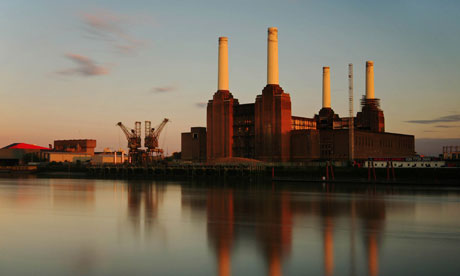
Even with the new logo buildings – the Shard, the Gherkin, the Quill et al – spearing London’s lowering skies, Battersea remains unrivalled when it comes to that most banalised form of contemporary status: the ‘iconic’. Certainly Battersea’s iconic status was uppermost in Tincknell’s mind as he led me, together with his head of communications, Alison Dykes, through freshly landscaped grounds – hardwood decking, raised flowerbeds, gravel pathways – towards the sales suite, pointing out on the way a scale model of the power station about the size of the average family home. ‘Isn’t it fantastic,’ he enthused, ‘it’s the one they used for the Olympics’ closing ceremony, one of only seven iconic buildings that Danny Boyle chose.’
Inside the suite I took my squishy seat at an opulent lozenge of a table, Alison settled herself a few places off, Tincknell launched straight into his PowerPoint spiel – just as if I were some important oligarch or Chinese millionaire intent on investing. He told me his previous developments included such exercises in ‘place making’ as Portsmouth’s Gunwharf Quays, which gave me pause for thought, because the Quays is a completely generic example of the glass’n’steel mixed retail/residential/ commercial development, distinguishable only by the ghastly Spinnaker Tower, a signature eyesore of bellying white spars that makes Anish Kapoor’s absurd Olympics evisceration, the ArcelorMittal Orbit, look positively subtle. Oh well, no matter, because unlike the poor blitzed Pompey docks, or Stratford marshes, the power station has oodles of authenticity to spare.
Or, as Tincknell put it: ‘Battersea has iconic authenticity, industrial heritage oozes from every brick.’ He went on to explain that the power station presented an ‘iconic image on London’s skyline’, and that this was why ‘iconic brands’ – such as Red Bull, the Batman movie franchise and, gulp, the Conservative Party (Cameron launched his 2010 election manifesto in its brick gulch) – chose to be associated with it.
I suppose I should have let Tincknell rattle on like this – he seemed happy enough. But the problem is that Battersea power station and I have form: I live less than a mile away, and its upside-down table leg chimneys have dominated my immediate skyline for almost twenty years: I clock them when I walk the dog in the local park, or if I go to the post office on the Wandsworth Road. On my way into town over Vauxhall Bridge I see them looming over the Thames littoral, while when I cycle home, late at night, across Chelsea Bridge, the sight of a late train emerging from the silhouette of the power station to head over the railway bridge towards Victoria always summons De Chirico’s canvases to my mind’s eye: the juxtaposition of colonnades, trains and arbitrary hunks – human musculature or masonry – evokes urban alienation by perspectival overdetermination. Anything fundamental happening to the power station – which has been slowly mouldering away through my entire adult life – will be the architectural equivalent of a ‘domestic’.
But again, to be fair to Tincknell, he’s not the only one who’s convinced of Battersea’s iconic status; he told me that 14,000 people had turned up for the public consultation meeting to consider his development plan – for any less emotive building numbers would have been paltry. Indeed, so many local people felt they had something to contribute that the meeting was held in the power station itself: a nice circularity, as if Battersea had been built solely as a venue for consideration of its own renovation. Still, I probably shouldn’t have chimed up with ‘Iconic of what, exactly, Rob?’ because Tincknell, dropped out of his script, was so flummoxed that after thirty seconds or so I had to rescue him: ‘You mean iconic of Britain’s great industrial past, don’t you?’ A pabulum he seized on, and which allowed him to continue spieling; at one point he got a slide up on the PowerPoint that juxtaposed equally vacuous ascriptions – Authentic/Exclusive, Industrial/Inclusive, Ours/But-It’s-Yours – and then told me that the great thing about the Battersea development would be its dissolution of these vaporous alternatives. The brand (he used the term shamelessly) would be both safe and exciting, both exclusive and – yes – inclusive. Rob is much preoccupied by what makes ‘a great place’, but worryingly – considering he aims to make Battersea an autonomous ‘city centre’ with its own arts scene – he doesn’t think the Barbican qualifies.
His own wish list when it comes to cultural capital seems oddly abbreviated. He told me he’s asked the Theatre 503 Company to consider moving to the renovated power station from their current venue above a pub up the road called the Latchmere, and referred a little gnomically to something that might be done with the Royal College of Art. There was also talk of the Chelsea Fringe Festival, and later, when he was driving me round the site in his big boxy black Range Rover, he showed me the pop-up park he’s had erected in which pride of place is given to the boat in which Ben Fogle rowed the Atlantic. A pub theatre company and a TV adventurer’s rowboat seem more Bilbo Baggins than Bilbao.
I don’t say any of this to be mean to Rob Tincknell; in fact, I liked him from the onset, and liked him still more when we got away from the PowerPoint icons of the iconic power station and began scaling the real thing. There was no gainsaying his enthusiasm for the building, and while his plan to create an internal sixty-metre atrium – so that those inside will look up at the chimneys soaring priapically over their heads – seems either nutty or embarrassing, there’s no disputing that it’s the sort of masonry magniloquence the global rentier elite revel in. Because, saving Rob’s green and tender egalitarian feelings, there’s absolutely no question that the new Battersea is all about catering to these folk – if not in person, then in the persons of those they buy and let to.
Jonathan Rosenbaum on Otto Preminger (1995)
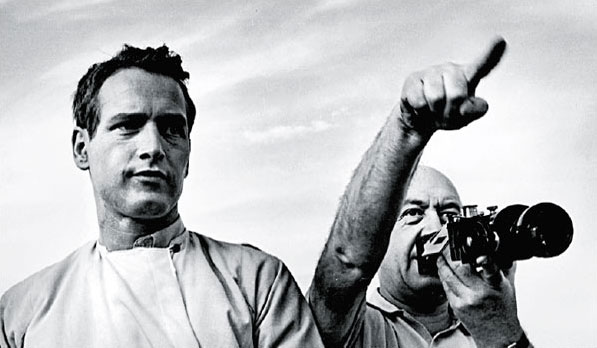
Otto Preminger with Paul Newman on the set of “Exodus,” 1960.
Like Erich von Stroheim, Preminger was born a Viennese Jew — but 20 years later and into a much higher economic bracket — and wound up playing the part of a Prussian sadist both on-screen and off. Stroheim, who kept his ethnic roots hidden, was more likely to vent his spleen at producers than at actors or assistants; but Preminger, who became his own producer, was the classic abusive dictator on his own sets. Anatomy of a Filmmaker — an interesting feature-length documentary about his career produced by his own family, hosted by Burgess Meredith, and recently released on video — devotes much of its space to exploring this issue. “I give ulcers, I don’t have them,” Preminger once told Peter Bogdanovich. I can vouch for the accuracy of this remark, having once spent a morning in the mid-70s watching Preminger shoot part of his penultimate feature, Rosebud, in Paris. However gracious he might have been to visiting journalists, he was hell on wheels to some of his employees.
Yet his films, for all their cynical and mordant undertones, are nearly always searching inquiries, almost never imposing foregone conclusions. Apparently the major source of his quarrels with actors was his refusal to give them motivations for their characters, an approach that often plays havoc with dramatic resolutions. But he preferred to keep alive the mystery of his characters’ personalities, to forestall any pat conclusions about them.
The first significant stretch of Preminger’s career was 1944 to 1952 — from Laura to Angel Face, with four other wonderful noirs in between (Fallen Angel, Whirlpool, Where the Sidewalk Ends, and The Thirteenth Letter). The second was roughly the first decade of his independence. There are interesting connections between these two periods — Bonjour Tristesse can be seen as a remake of Angel Face (my favorite Preminger noir), and Anatomy of a Murder, probably his best film altogether, refines some of the virtues of Laura. But the differences between Preminger as a contract director (mainly at Fox) and as an independent are equally striking. Liberated from the noirs and the (mainly Lubitsch-style) costume pictures of his stint at Fox, he gravitated more and more toward all-star blockbuster adaptations of best-sellers that became increasingly bloated. At their best they were grand and thoughtful entertainments; at their worst, the ambiguity typical of Preminger gave way to a sort of demographic calculation that bordered on Hollywood doublethink.
Sometime around the mid-60s, Preminger began to lose his rapport with the public, and he never fully regained it. Sadly, he suffered a major legal defeat around the same time that reversed his fortunes as a pioneering independent: after winning his battles with the Production Code over “risque” language in The Moon Is Blue and the taboo subject of heroin addiction in The Man With the Golden Arm, he tried unsuccessfully to sue Columbia Pictures and its TV subsidiary, Screen Gems, for granting him no control over the cuts and commercial interruptions made in TV showings of Anatomy of a Murder. (If he’d won, and thereby set a legal precedent, the last 30 years of American film history would have been markedly different.)
By the mid-60s his films had become even more personal, but the garish side of his earlier work tended to take over, with fascinating but often alienating results. The grotesque liberal pieties of Hurry Sundown and Tell Me That You Love Me, Junie Moon and the ugly extravagances of Skidoo (his hippie musical) and Such Good Friends were certainly distinctive and expressive, making these films prime cult material. But the general audience mainly stayed away, leaving it to hard-core enthusiasts (including me) to enthuse over such factoids as that Jackie Gleason’s LSD experience in Skidoo closely approximated Preminger’s own acid trip, for which Andy Warhol served as guide. [2011 afterword: This factoid, which I most likely encountered in the underground press during this period, apparently isn’t true; from more reliable sources, it appears that Timothy Leary was Preminger’s initial guide, although he chose to spend the latter part of his trip alone.] Then Rosebud, probably the nadir of his career, discouraged even us fans; and the touching sincerity of The Human Factor, his last film, which he financed with great difficulty, counted for virtually nothing.
A favorite among auteurists, Preminger has never registered as a meaningful stylist with the general public, even when his movies were popular, largely because he never stuck to the same kinds of pictures and always discussed social issues in his interviews rather than style or technique. Pauline Kael argued in 1963 that his very diversity was a flaw: “If Preminger shows stylistic consistency with subject matter as varied as Carmen Jones, Anatomy of a Murder, and Advise and Consent, then by any rational standards he should be attacked rather than elevated.” From the standpoint of conventional aesthetics, Kael has a point. But arguably Preminger, an investigator eager to pry into all sorts of material, changes some of the conventional rules by which we define success and failure, at least if we can join in the spirit of the search…
The persistence of memory
… But the story, what the book is ‘about’, matters less than what the book is: an extraordinary replication not of the experience of a marriage but of the memory of the experience of a marriage. For while we remember stories, memory is not a story. In Light Years, James Salter strips out the narrative transitions and explanations and contextualisations, the novelistic linkages that don’t exist in our actual memories, to leave us with a set of remembered fragments, some bright, some ugly, some bafflingly trivial, that don’t easily connect and can’t be put together as a whole, except in the sense of chronology, and in the sense that they are all that remains. Over these surviving fragments of the past, where the distinction between the unique and the repeated is blurred, Salter sets the characters’ reflections hovering, in the way our present thoughts will flutter back to burnish and brood over, and find connections between, the same small set of memories we get to keep …
Things to do with books
Ford Madox Ford, who, on being asked by an American editor to write a few hundred words on the uses of books, replied, in this letter from September 14, 1929:
Books can be useful from so many points of view. In my early days, for example, I used to use the Encylopedia Britannica as a trouser-press and certainly the house that was without it was to be pitied. Books are also very useful for pulping; bibles and other works set over the heart will deflect bullets; works printed on thin india paper are admirable if you happen to run out of cigarette papers. Their use for that purpose is in fact forbidden in France where there is a tobacco monopoly. In fact, if you are ever without a book you are certain to want one in the end. For the matter of that, my grand aunt Eliza Coffin used to say: “Sooner than be idle, I’d take a book and read.” According to her the other uses of books were (1) for the concealing of wills (2) for the ditto of proposals of marriage by letter; (3) for pressing flowers; (4) folios piled one on the other will aid you to reach the top row in the linen cupboard; (5) they have been used as missiles, as bedsteads when levelly piled, as wrappings for comestibles; (6) as soporifics, sudorifics, shaving paper etc.
I was once accused of using slices of bacon, at breakfast, to mark my place in a book. That is untrue.